Shopify SEO Services That Drive Revenue, Not Just Rankings
Is your Shopify store struggling to rank on Google? Our Shopify SEO services fix the issues that hold growth back, from duplicate URLs and thin collection pages to slow Core Web Vitals, so your organic traffic turns into measurable sales.

Traffic that brings revenue, not just visits
-
Tailored SEO for Shopify stores, Search, AI and AEO discovery
-
20+ years of E-Commerce and Shopify SEO experience
-
Free Shopify SEO audit with every proposal
 Talk to an
Expert
Talk to an
Expert

Get Your Free Shopify SEO Proposal
Share your Shopify store for a detailed blueprint & strategy →
300+
Shopify Stores Optimized
20+
Years eCommerce Experience
3500K+
Clients Worldwide
97%
Client Retention Rate
 Understanding the Platform
Why Shopify SEO Is Not the Same
as Regular SEO
Shopify SEO is different from regular website SEO because Shopify has its own platform setup.
That is why SEO for Shopify stores needs a more platform-aware approach.
What Generic SEO Agencies Often Miss in Shopify SEO

Duplicate URL Problem
Shopify can create more than one URL for the same product, such as a direct product URL and a collection-based URL. Generic SEO agencies may treat this like a standard website setup, even though it needs more careful handling in Shopify store SEO.

Thin Collection Pages
Collection pages are important in Shopify, but they often go live with very little content. A general SEO approach may overlook how important these pages are for Shopify SEO optimization and category-level rankings.

Theme Bloat & Core Web Vitals
Many Shopify themes come with extra scripts, apps, and design elements that affect speed. Generic SEO agencies may focus on basic on-page tasks without looking deeply at theme performance and Core Web Vitals.

Missing Schema & Product Markup
Product rich results depend on structured data such as price, ratings, and availability. This is often treated as a minor technical task, even though it plays an important role in Shopify SEO visibility.
What
 Shopify SEO Does Differently

Shopify-Focused Keyword Mapping
We map keywords to the right Shopify pages, including products, collections, blogs, and core pages. This gives each part of your store a clearer role in your Shopify SEO strategy.

AI & AEO Optimization
Our Shopify SEO services also prepare your store for newer search journeys, including AI Overviews and answer-led discovery.

Revenue-Based Reporting
We connect GA4, Search Console, and Shopify analytics so you can see how SEO is contributing to revenue, not just traffic.

Ongoing Strategy Updates
We keep refining the strategy as search behaviour and algorithms evolve, so your Shopify SEO stays aligned with what matters now.
0 M+
Active Shopify Stores Globally
0%
Global eCommerce Market Share
0%
of purchases begin with a search engine
What We Do
Full-Spectrum Shopify
SEO Services
Our Shopify SEO services are built around how Shopify stores are structured and how people search.



Shopify SEO Audit
We start with a detailed Shopify SEO audit to understand how your store is performing and where improvements are needed. We review your setup across technical SEO, content, page structure, and search visibility so we can build the right action plan.
-
 Duplicate URL and Canonical Analysis
We check how Shopify is generating product and collection URLs across your store. Then we identify duplicate URL paths and review canonical signals that may affect rankings.
-
Core Web Vitals and Page Speed Review
We analyse loading speed, stability, and responsiveness across key store pages. This helps us find theme, image, script, or layout issues that may be slowing the experience down.
-
Crawl and Indexation Health Check
We review how search engines are crawling and indexing your Shopify store. We look for blocked pages, missed pages, crawl waste, and indexation gaps that need attention.
-
Competitor and Keyword Gap Analysis
We compare your store with competing Shopify stores in your space. This helps us find missed keyword opportunities, content gaps, and areas where your visibility can improve.

Keyword Research & Mapping
We build keyword targeting around the real structure of your Shopify store, not just broad category terms. This helps us create stronger SEO for Shopify stores by matching the right search intent to the right pages.
-
High-Intent Product Keyword Clusters
We identify product-focused keywords that show strong buying intent. Then we group them in a way that helps product pages target more relevant searches.
-
Collection-Level Keyword Mapping
We map broader search themes to your collection pages. This helps us build stronger visibility for category-level searches and shopping intent.
-
Search Intent and Content Planning
We study how people search at different stages of the buying journey. Then we align your products, collections, and content with those search behaviours.
-
Competitive Keyword Gap Targeting
We review which keywords your competitors are ranking for and where you can compete better. This helps us prioritise useful opportunities instead of targeting terms with weak intent.

Technical SEO for Shopify
We improve the technical foundation of your store so search engines can crawl and understand it more clearly. Our Shopify SEO optimization focuses on the platform settings and structural issues that matter most for long-term growth.
-
Canonical Tag Implementation
We set up and review canonical tags across product and collection pages. This helps search engines understand which URLs should carry the main ranking signals.
-
XML Sitemap and Robots.txt Optimisation
We improve the way your sitemap and robots instructions support crawling. This helps search engines focus on the pages that matter most to your store.
-
Schema and Structured Data Markup
We implement structured data that gives search engines more context about your pages. This can support better visibility for products, reviews, pricing, and other key details.
-
Mobile-First and Core Web Vitals Improvements
We review mobile usability and page experience across your store. Then we improve the technical elements that affect performance, accessibility, and search visibility.

On-Page & Product SEO
We optimise the page elements that shape how your products and collections appear in search. This strengthens your Shopify store SEO and helps key commercial pages become more relevant and easier to understand.
-
Product Title and Meta Optimisation
We improve titles and meta descriptions so they match search intent more clearly. This helps product pages become more relevant and more compelling in search results.
-
Collection Page Content Strategy
We build useful content for collection pages instead of leaving them thin or purely functional. This helps those pages support rankings, user understanding, and category-level visibility.
-
Image Alt Text and Compression
We improve image alt text and reduce unnecessary image weight across the store. This supports page performance while also giving search engines clearer image context.
-
Internal Linking Architecture
We strengthen links between products, collections, blogs, and key pages. This helps users navigate more easily and helps search engines understand page relationships.

Content & Link Building
We create content and build authority to support long-term Shopify SEO growth. Our work here helps your store attract relevant searches, support buying journeys, and build stronger trust signals over time.
-
Shopify Blog Content Strategy
We plan blog topics around search demand, product relevance, and user intent. This helps your content support both traffic growth and product discovery.
-
Buying Guide and Comparison Content
We create content that helps shoppers evaluate options more confidently. This gives your store useful mid-funnel pages that can attract qualified traffic.
-
Relevant Backlink Acquisition
We build links from relevant and credible sources that support your domain strength. This helps improve authority in a way that aligns with your niche and store goals.
-
Digital PR Support for eCommerce Brands
We create outreach opportunities that help your store earn wider visibility online. This supports link growth, brand reach, and stronger search trust signals.

Shopify AI SEO & AEO
We help your store stay visible across newer search experiences, not just traditional results. As part of our Shopify SEO strategy, we prepare your content and page structure for AI-led and answer-led discovery.
-
AI Overview Optimisation
We shape content so it is easier for search engines to interpret and summarise. This helps improve your visibility in AI-generated search experiences where relevant.
-
Structured FAQ and Schema Support
We add supporting FAQ formats and schema where they make sense. This helps search engines understand page content more clearly and improves answer-readiness.
-
Content Formatting for Answer-Led Discovery
We organise content in a way that supports direct, useful answers. This can improve how your pages appear across answer-driven search journeys.
-
Visibility Support for AI-Driven Search
We prepare your store content for evolving search behaviour across AI-led platforms. This helps your Shopify store stay aligned with how product discovery is changing.

Conversion Rate Optimisation
We improve the way users move through your store after they land on it from search. This helps your Shopify SEO services support not only traffic growth, but also better engagement and stronger business outcomes.
-
A/B Testing for Product and Collection Pages
We test page elements to understand what improves user action and page performance. This helps us make better decisions based on actual behaviour, not assumptions.
-
Checkout Flow Optimisation
We review the checkout journey to reduce friction and improve completion. This helps turn more search traffic into completed purchases.
-
Heatmap and UX Analysis
We study how users interact with key pages across your store. This helps us spot where people hesitate, drop off, or miss important actions.
-
Revenue-Attributed Reporting
We connect SEO performance with sales and business outcomes more clearly. This helps you understand how search visibility is contributing to revenue over time.

Shopify SEO Recovery
We review stores that have seen a drop in rankings or traffic and identify what needs correction. Then we build a focused recovery plan to restore visibility in a structured way.
-
Algorithm Impact Assessment
We study traffic and ranking changes around major search updates. This helps us understand whether the drop is linked to broader algorithm shifts.
-
Ranking and Traffic Drop Analysis
We review which pages, keywords, and sections of the store have been affected. This helps us identify patterns and prioritise the right recovery actions.
-
Backlink Profile Review
We assess your backlink profile to understand quality, relevance, and risk. This helps us identify whether link-related issues are affecting performance.
-
Recovery Roadmap and Implementation
We create a practical recovery plan based on the issues we uncover. Then we work through the required fixes to support stronger search visibility again.
How We Work
Our Proven Shopify SEO Process
for Real Store Growth
A clear and structured Shopify SEO process based on how Shopify stores
are crawled,
indexed, and ranked.
1
Shopify Store SEO Audit and Health Check
We begin by reviewing your entire store to understand its current SEO condition. We check how your Shopify URLs are structured, how pages are being crawled and indexed, how your collections and product pages are set up, and whether technical issues are affecting visibility. This stage helps us identify what needs to be fixed first and where the strongest opportunities are.
2
Keyword Research and Shopify Page Mapping
Next, we research the terms your audience is actually using and map them to the right pages across your store. This includes product pages, collections, blogs, and core landing pages. We define which keywords belong where, identify collection-level opportunities, and build a clearer structure for SEO for Shopify stores.
3
Technical SEO Implementation
Once the strategy is in place, we start improving the technical setup of your Shopify store. We work on canonical tags, sitemap and robots settings, schema markup, image handling, and theme-level performance areas that affect crawlability and speed. This step strengthens the technical foundation needed for better Shopify SEO optimisation.
4
On-Page SEO and Content Optimisation
After the technical groundwork is ready, we optimise the pages that drive search visibility and sales. We improve product titles, meta descriptions, headings, alt text, and collection content. We also build stronger internal links and create supporting content that helps important pages perform better in search.
5
Authority Building and Link Acquisition
Once the store structure and page content are stronger, we focus on building authority around the site. We create content-led link opportunities, support outreach, and earn relevant backlinks that strengthen your domain and key store pages. This helps improve trust, visibility, and long-term Shopify SEO performance.
6
Tracking, Reporting and Continuous Optimisation
We continue to monitor how your store is performing and refine the strategy based on real results. We track rankings, organic traffic, page performance, and revenue contribution using Shopify, GA4, and Search Console data. This helps us improve your Shopify SEO strategy over time, based on what is working.
Platform Intelligence
Key Shopify Features
We Turn Into SEO Advantages
Shopify's built-in features become powerful when paired with expert SEO implementation. Here's how we turn platform defaults into ranking advantages.
Shopify powers 10.56% of global eCommerce and supports over 5.54 million active stores with powerful tools built in. Yet SEO success does not come from features alone. It depends on how those features are structured, configured, and extended to support search visibility.

100+ Storefront Themes
Shopify feature:
Shopify themes help brands launch quickly with
ready-made storefront designs.
What we do for SEO:
We review your theme structure,
remove unnecessary bloat, improve image handling, and strengthen page speed signals that
affect Google rankings and user experience.

Built-In Checkout and Payments
Shopify feature:
Shopify makes checkout simple with secure payments and
a smooth buying flow.
What we do for SEO:
We make sure the wider user journey
around key pages supports performance, tracking, and engagement, so your store works better
as part of a complete SEO and conversion path.

Product Variant System
Shopify feature:
Shopify lets you manage multiple product variants
within one product setup.
What we do for SEO:
We review how variant URLs are
handled, set the right canonical signals, and guide indexation so search engines focus on
the most useful version of the page.

Shopify Blog
Shopify feature:
Shopify includes a built-in blog for publishing guides,
updates, and content.
What we do for SEO:
We turn that blog into a support
system for SEO for Shopify stores by planning useful topics, improving structure, and
linking content back to your product and collection pages.

Shopify Analytics and Reports
Shopify feature:
Shopify gives you built-in reporting across store
activity and sales performance.
What we do for SEO:
We combine Shopify data with GA4 and
Search Console so you can see how search visibility is contributing to traffic, engagement,
and revenue.

Apps and Store Extensions
Shopify feature:
Shopify apps add useful features across reviews,
filters, loyalty, shipping, and more.
What we do for SEO:
We review which apps support
performance and which ones add unnecessary code, so your Shopify SEO optimization is not
affected by avoidable speed or crawl issues.
Why Savit
Savit vs. Generic SEO Agency vs. In-
House Team
Shopify's built-in features are powerful — but only when paired with expert SEO
implementation. Here's how we turn platform defaults into ranking advantages.
| What Businesses Compare | Savit Digital Marketing ⭐ Best Choice | Generic SEO Agency | In-House SEO Team |
|---|---|---|---|
| Shopify Platform Expertise |  300+
Shopify stores, 20+ years 300+
Shopify stores, 20+ years |
 May
not specialize May
not specialize |
 Requires training & tools Requires training & tools |
| Duplicate URL / Canonical Fix | Shopify-native implementation |
Often missed entirely |
Depends on expertise |
| AI SEO & AEO Optimization | Full
AI Overviews & LLM strategy |
Rarely offered |
Limited knowledge |
| Revenue-Attributed Reporting | GA4 +
Shopify + GSC unified |
Rankings/traffic only |
Tools overhead cost |
| Collection Page SEO Strategy | Full
editorial content strategy |
Usually generic |
Bandwidth constrained |
| Shopify Schema / Rich Results | Product, FAQ, Breadcrumb, Org |
Basic only |
Developer dependency |
| Algorithm Update Response | Proactive, within 48 hours |
Reactive, monthly reports |
May
miss updates |
| Transparent Monthly Reporting | Full
team at agency cost |
Variable, often template | High overhead (salary+tools) |
| Cost Efficiency | Cost
Efficiency |
Varies by agency |
Internal benchmarks only |
Ready to See the Savit Difference?
Get a personalised comparison report for your Shopify store — free, no obligation.
Proven Results
Shopify Stores We've Grown
Real Shopify clients. Real traffic. Real revenue growth. No stock screenshots.
Boheco
Challenges
- Strong competition is dominating organic traffic and top keyword rankings.
- Limited flexibility due to compliance restrictions and approval dependencies.
SEO Approach
- Executed technical and on-page optimization, including metadata, schema, and indexing improvements.
- Optimized content with high-intent keyword targeting and search intent alignment.
- Strengthened internal linking and site structure to improve rankings and organic performance.
~2.41X Growth
(8.2K → 19.8K)Organic Sessions
~1.73X Growth
(8.6K → 14.9K)Clicks
~1.65X Growth
(55 → 91)Keyword Rankings
~2.41X Growth
(8.2K → 19.8K)
Organic Sessions
GNH India
Founded in 2003, GNH India is a WHO-GDP and ISO 9001:2015 certified global pharmaceutical distributor based in Mumbai. The company specialises in sourcing and supplying orphan drugs, comparator medications, clinical trial supplies, and name-patient program medicines to more than 180 countries. GNH India is a registered member of Pharmaexcil (Pharmaceuticals Export Promotion Council of India) and FIEO (Federation of Indian Export Organisations), which reflects their commitment to ethical exports, global trade compliance, and quality-driven pharmaceutical logistics.
136.6% Growth
(12629 → 29,883)
Organic Sessions
ProExtender India
ProExtender India is an eCommerce website offering traction-based male enhancement devices designed to support size improvement and conditions like Peyronie’s disease. The website focuses on educating users about the product while driving conversions through organic search visibility and targeted keyword rankings.
~2.57X Growth
(92.5K → 237.4K)
Organic Sessions
eDrugstore
eDrugstore is a U.S.-based online pharmacy and telehealth service specializing in men’s health, sexual wellness, and lifestyle treatments. It offers FDA-approved medications with discreet delivery and online doctor consultations for a safe, private experience.
What Our Clients Say
Trusted by 5,000+ Businesses
Worldwide
Real Shopify clients. Real traffic. Real revenue growth.

Amar Equipment Pvt. Ltd.
“Savit Interactive has been managing SEO for Amar Equipment Pvt Ltd for the past year, and we’ve seen good progress in keyword rankings and organic enquiries. After limited success with PPC earlier, we also engaged them for Google Ads, and within a couple of months, we started seeing positive results. Special thanks to Akshay Kabre for managing the Google Ads account efficiently. The team is professional, responsive, and easy to work with.”
National academy
We've had a great association with Savit. We have see better visibility, higher quality leads and efficient campaigns. Great experience working with Akshay for PPC and Sonam for SEO. Would definitely recommend.

Ankita Gupta
We have been working with Savit Interactive for our Google Ads campaigns, and the experience has been good overall. Our point of contact, Palak, is very approachable, responsive, and easy to coordinate with. The team is supportive and professional, always ready to assist with our queries. There is still some scope for improvement in their campaign strategies and optimization approaches, but overall, it has been a positive experience working with them.
Kashish Chaudhari
We’ve been working with Savit Interactive for our Website, SEO, and PPC management, and their services have been truly impressive. The team is professional, responsive, and always available whenever needed. A special mention to Akshay for efficiently handling our PPC campaigns and ensuring great results. Their consistent support and expertise have significantly enhanced our online presence. Highly recommended!
Mihir Vaze
We are using their services for our website and are a good trusted company which gives good SEO results. I would highly recommend using them.
Dr.Santosh Jaiswar
As a healthcare professional in Mumbai, I understand the importance of having a strong online presence. I was searching for an SEO company in Mumbai that could provide tailored services for my medical practice, and Savit exceeded my expectations.
Our Achievements
300+ Shopify Stores
Optimized
0M+
Keywords Tracked
0M+
Transactions Driven
0+
Markets Served
0K+
Keywords on Page 1
Got Questions About Shopify SEO?
We answer the questions businesses commonly have before choosing a Shopify SEO partner, from technical concerns to strategy, timelines, and reporting. Browse by category to find the answers you need.


 Blogs /
Insights
Blogs /
Insights
Stay Ahead With AI Marketing Insights
Every interaction is a chance to build connections and strengthen your brand’s presence. We help you turn social media engagement into real business growth.


How to Do Keyword Research for Indian Audiences
India is not one market. It is a hundred markets sharing one search bar. Someone in Chennai searches “best CA firm near me.” Someone in Ludhiana types “CA consultant charges.” Both are looking for the same service. Both are potential customers. And a generic keyword strategy quietly misses both of them. That is the gap […]
Read More
Can AI Understand Human Emotions? The Future of Empathetic Marketing
During the 2020 COVID-19 lockdown, Mondelez India and Ogilvy had a problem. Small local shops across the country had been battered for months. Cadbury had always been synonymous with Diwali gifting. How do you run a Diwali campaign that acknowledges what has actually happened? Their answer: create India’s first hyper-personalised ad campaign. AI collected data on 1,800 local retailers […]
Read More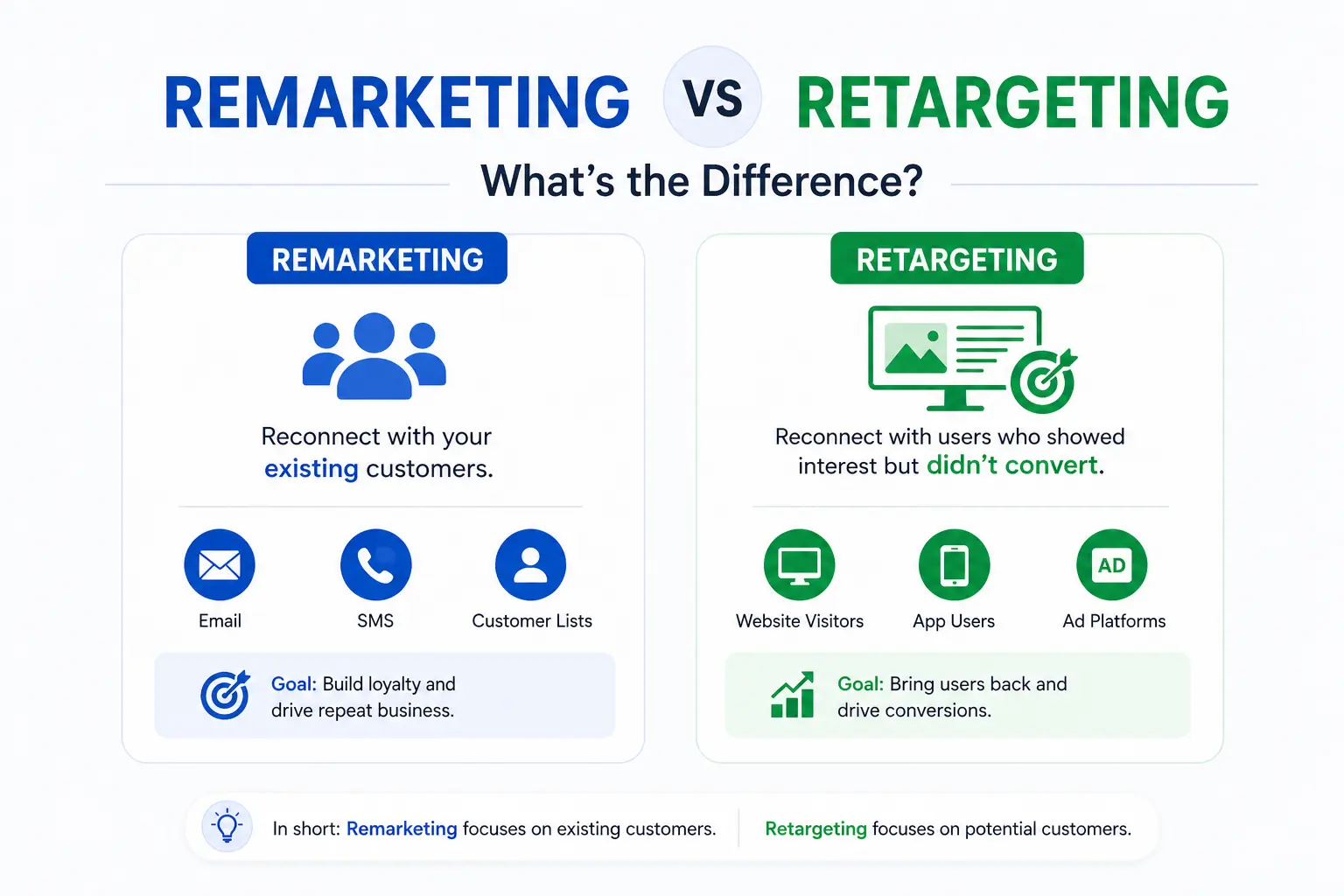
Remarketing vs Retargeting: What’s the Difference?
Two closely related strategies, often confused as one. This guide breaks down how remarketing and retargeting differ and how to use each to bring lost visitors back with intent. In online marketing and advertising, some of the most widely used terms are also among the least consistently defined. Remarketing and retargeting are often treated as interchangeable, creating […]
Read More