YouTube SEO Services That Get Your Videos Found,, Watched, and Cited
Most business channels do not have a content problem. They have a discovery problem. Our YouTube SEO work finds where discovery breaks on your channel, rebuilds the signals YouTube reads, and extends your videos into Google results and AI answer surfaces. Savit has spent 25 years making search work for businesses, and we hold YouTube search engine optimization to the same standard: visibility you can see, traffic you can attribute, and enquiries you can bank.

25+ years of search expertise, now directed at video discovery
-
Optimisation across YouTube search, recommendations, Google video results and AI answers
-
We revive your existing library before asking you to produce more
-
Free channel audit with every proposal
 Talk to a YouTube SEO Specialist
Get Your Free Shopify SEO Proposal
Share your Shopify store for a detailed blueprint & strategy →
3500+
Clients Served Worldwide
60000+
Page 1 Keywords Ranked
15K+
Industries We Work Across
25+
Of Search Expertise
 Understanding the Process
Video Discovery Has Changed Shape.
Here Is What That Means for Your Channel.
Video discovery no longer runs on one system. It runs on several, each reading different signals, each reaching viewers at a different moment.
Channels that optimise for one of them and ignore the rest end up with a library that performs in exactly one place. Here is the ground as it stands, and how we work with it.
What Has Changed

Discovery Is Three Systems, Not One Algorithm
YouTube discovery works through three distinct systems: search, feeds, and recommendations. Search focuses on how closely your content matches a query, while feeds predict what viewers may choose next. Recommendations rely heavily on co-viewing and audience behaviour. A video can perform well in search yet receive few recommendations. Each discovery system requires a different content and optimisation approach.

YouTube Became a Citation Source for AI Answers
YouTube is increasingly used as a source for AI-generated answers, but citation does not simply follow video popularity. Research analysing over 100 million AI citations found almost no relationship between view count and citation frequency. Only 31% of cited videos used chapters or timestamps. This suggests well-structured, reference-style videos can create citation opportunities beyond what channel size alone can deliver.

Google Absorbs Video Into Its Own Results
Video carousels and key moments mean your video competes on the Google results page, not only inside YouTube. Clear chapters give Google segment-level context and let searchers jump straight to the moment they need, which widens the range of queries a single video can usefully serve. Most channels never claim that ground, because the structural work sits at upload and rarely gets done.

Shorts Changed the Entry Point, Not the Authority Layer
Shorts move reach efficiently and hold very little depth. Search intent, watch time and citation value all concentrate in long-form. The OtterlyAI study put long-form at 94% of YouTube's AI citations, with Shorts at 5.7%. The practical answer is a deliberate relationship between the two, where Shorts introduce and long-form converts, rather than a choice between them.
How
 Approaches It

We Read Your Traffic Sources Before We Touch Your Metadata
Every engagement opens inside your Reach report. Whether your problem sits in search, in the feed or in recommendations changes the entire remedy. A channel losing viewers at the thumbnail needs packaging work. A channel with strong click-through and collapsing retention needs content structure. Rewriting descriptions on either one wastes the first two months. We diagnose first and act second, every time.

We Treat Packaging and Payoff as One Job
Your title and thumbnail earn the click. Your opening thirty seconds decide whether YouTube considers that click worth serving again. Work on either alone and you get one of two failures: strong click-through with retention falling off a cliff, or excellent retention that nobody ever reaches. We build both together and test them as a pair.

We Build for Extraction, Not Only for Ranking
Chapters, accurate transcripts, description depth and clear on-screen structure give search and answer systems far more to work with when they read your video. We build them in as standard, because the same structure that helps YouTube understand your video is the structure that makes it quotable elsewhere.

We Work at Channel Level, Not Video by Video
Videos sitting inside coherent clusters, sequenced playlists and consistent topical territory tend to earn recommendations more readily. Scattered content muddies the system's read of who your audience is, which costs you reach across everything you publish. Our SEO for YouTube channel work starts with the architecture of the library and then improves the videos inside it.
0 M
YouTube's advertising reach in India
0%
AI citations go to long-form YouTube videos
0%
Google results show AI Overviews + video carousels
Services
Complete YouTube SEO Services,
Built Around How Video Gets Discovered
Our YouTube SEO services cover every surface your video can be found on, from YouTube's own search box to the AI answer a buyer reads before they ever reach your site. Each engagement is scoped to what your channel needs, in the order that returns value fastest.



YouTube SEO Audit and Channel Diagnostics
A channel audit that tells you exactly where discovery is breaking. We start by finding the bottleneck. Most channels have one dominant failure point, and until you know which one it is, every hour of optimisation is a guess. Our audit produces a diagnosis, a priority order and an estimate of where the return sits.
-
 Traffic Source Analysis.
We break down where every view comes from and identify which discovery system has gone quiet on you.
-
Impressions and Click-Through Diagnosis.
We separate a visibility problem from a packaging problem, because they look identical in a views report and need opposite fixes.
-
Retention Curve Review.
We read the drop-off pattern across your library and find where viewers consistently leave.
-
Structure and Adjacency Mapping.
We audit metadata, chaptering and playlist logic, then map which channels your audience already watches.

YouTube Keyword and Search Intent Research
Keyword research built for how people search video, not web pages. Video search behaves differently. It skews towards how-to, comparison, demonstration and troubleshooting, and the same buyer will phrase a query differently on YouTube than on Google. Our YouTube SEO experts research the video-specific demand in your category and map it against what your library already covers.
-
Query Mining Across Surfaces.
We pull demand from YouTube autosuggest, related queries, competitor performance and Google video results.
-
Intent Classification.
We sort every query by what the viewer wants, because a comparison query and a tutorial query need different videos.
-
Query-to-Video Mapping.
We match existing videos to the demand they can win now, and flag the gaps worth producing for.
-
Regional and Language Demand.
India's video audience searches heavily in regional languages. We size that demand rather than assume it.

Video Metadata and On-Page Optimisation
Metadata that signals relevance to YouTube and to answer engines at the same time. This is the foundation layer, and it is where most channels leave the most value on the table. Our YouTube SEO optimization work builds every upload to be understood by the platform, indexed by Google and extractable by an AI answer engine.
-
Titles Built to Rank and Earn the Click.
Relevance front-loaded, intent clear and length disciplined to what actually displays.
-
Descriptions with Depth.
The opening lines carry the search weight. The full body carries the context that gets a video cited.
-
Chapters and Timestamps.
Structured so each chapter can stand as its own entry point in YouTube and in Google.
-
Transcript and Caption Accuracy.
We correct auto-captions and build multilingual tracks, because a clean transcript gives both YouTube and AI systems far more textual context than metadata alone.

Thumbnail and Packaging Optimisation
Packaging that earns the click and keeps the promise it made. Click-through rate is the first gate. If people do not choose your video when it is shown to them, nothing further downstream gets a chance. We build packaging as a system across your library rather than designing thumbnails one at a time.
-
Thumbnail Systems.
Consistent visual logic across a series, so your library becomes recognisable in a crowded feed.
-
Title and Thumbnail Tested as a Pair.
A dramatic thumbnail with an ambiguous title attracts the wrong click, and the wrong click costs you twice.
-
Benchmarking by Traffic Source.
Search click-through and recommendation click-through behave differently. We hold each to its own standard.
-
Structured Testing.
We test one variable at a time, read results after the data settles, and keep only what lifts click-through without hurting retention.

Retention and Watch-Time Optimisation
Retention work that holds viewers past the point where they usually leave. Watch time and viewer satisfaction carry heavy weight in whether YouTube expands a video's reach. We treat retention as an engineering problem with identifiable failure points rather than a matter of taste.
-
Retention Curve Diagnosis.
We find the exact seconds where your audience leaves and identify what causes it.
-
Opening Structure and Payoff Timing.
We restructure the first thirty seconds to confirm the promise fast and remove the delay that costs you the viewer.
-
Chaptering for Navigability.
Viewers who can jump to what they came for stay instead of leaving.
-
Structural Input on New Content.
We brief structure before production, and where you need it, our in-house video production team can build it.

Channel Architecture, Playlists and Session Design
Channel structure that turns one view into a viewing session. How much of a viewing session your channel earns feeds into how readily YouTube recommends it. A library organised into clear territory with connected paths gives viewers somewhere to go next. A scattered library does not, however good the individual videos are.
-
Content Clustering.
We group your library into defined topical territory so the recommendation system can read your audience clearly.
-
Playlist Sequencing.
Playlists built as viewing journeys rather than storage folders, each one designed to carry a viewer forward.
-
End Screens and Cards as Paths.
Every video ends by pointing somewhere deliberate, giving viewers a clear next step.
-
Channel Page and Trailer.
Your channel page converts browsers into subscribers, and most brand channels treat it as an afterthought.

Video SEO Beyond YouTube
Visibility across Google results and AI answer surfaces. Your video's audience is not only on YouTube. It is reading a Google results page and, increasingly, reading an AI-generated answer. Our video SEO services extend every optimised video into both, which is where a single asset starts earning several positions.
-
VideoObject Schema and On-Site Embedding.
Correct markup and embedding so Google can understand your videos properly, become eligible for its video features and drive traffic back to your own domain.
-
Key Moments Eligibility.
Chapter structure built to Google's key moments requirements so searchers can jump to the relevant segment directly from the results page.
-
Structured for AI Citation.
Reference-grade descriptions, accurate transcripts and answer-led chaptering, built around patterns that help videos become useful sources for AI-generated answers.
-
Off-Platform Tracking.
We monitor where your videos appear beyond YouTube and report it as visibility you own.
Recognised for Search Work.
Now Applying It to Video.
Two and a half decades of search results, industry recognition and a Google Premier Partnership sit behind every channel we take on.
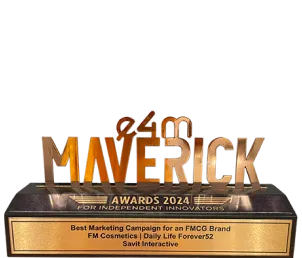
Maverik
India's Best Marketing Firm
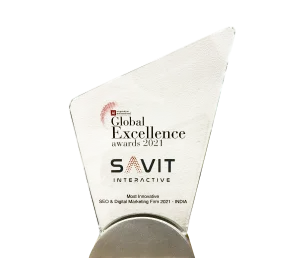
Global Excellence
Most innovative digital marketing
Inkspell
Top Marketing Brand
MSME
India Business Award
Best Enterprise of the year
(Marketing & PR)

Inkspell Unlocked Award
Most innovative digital marketing
Inkspell DOD Award
Best digital campaign for FMCG enterprise
Vyapaar Ratna Award
Best Marketing Firm
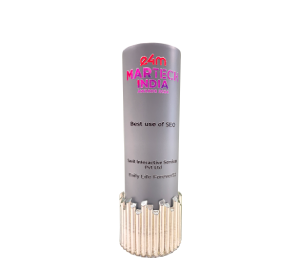
e4m Martech India
Best use of SEO

Digital Dragon Award
Best Search Marketing Campaign
Process
Our YouTube SEO Process, From Diagnosis to Compounding Discovery
We work in a fixed order, because the order is what makes results arrive early instead of late. Your existing library comes before new production. Off-platform reach comes once the foundation holds.
1
Channel Audit and Discovery Diagnosis
We map every traffic source, read retention across the library, benchmark your packaging performance and audit metadata and structure. You receive a diagnosis that names the bottleneck and a priority order that says what we fix first and why.
2
Search Intent Research and Content Mapping
We research the video demand in your category, classify it by intent, and map every query against your existing library. This tells us which videos can win now with optimisation alone, and which gaps justify new production.
3
Back Catalogue Optimisation
We rebuild your existing videos first. Metadata, chapters, transcripts, packaging and playlist placement across the library you already paid to produce. This is where the fastest returns sit, and it is the least glamorous part of the job, which is why it so often goes undone.
4
Packaging, Retention and Session Architecture
We build thumbnail and title systems across the library, act on the retention findings, connect videos through end screens and playlists, and rebuild the channel page. The channel starts behaving as one asset rather than a collection of uploads.
5
Off-Platform Video Visibility
We implement schema, embed videos across relevant site pages, build chapter structure to Google's key moments requirements and structure content for AI citation. Your videos begin earning positions outside YouTube.
6
Measurement, Testing and Iteration
We track discovery by source, benchmark click-through and retention against your own baseline, monitor where your videos surface off-platform, and report on what moved. Each month's findings set the next month's priorities.
Discovery Surfaces
The Six Surfaces Where Your Videos Get Found, and What We Do on Each
Every surface reads different signals and reaches viewers at a different moment. We work all six, and we report on each separately, because a channel growing in search and flat in recommendations needs a different next move than one with the opposite pattern.

YouTube Search
The surface: Query-led and intent-explicit. YouTube weighs relevance, engagement and quality here, which makes it the closest surface to traditional search.
What we do:
Research the queries with genuine video demand, build metadata and transcript depth that answers them precisely, and make sure the video satisfies the intent it ranked for.

Browse: Home and Subscriptions
The surface: Personalised feed prediction. It reaches viewers at the moment they are deciding what to watch, and it decides using their history rather than your keywords.
What we do:
Sharpen packaging discipline, hold publishing consistency, and clarify the audience signals your channel sends so the feed knows who to show you to.

Suggested Videos
The surface: Recommendations beside and after other videos, shaped by co-viewing patterns. Often the clearest indication that YouTube sees a fit between your content and an audience that already exists.
What we do:
Hold topical consistency so your adjacency data stays clean, map the channels you want to sit beside, and design session paths that carry viewers between your videos.

Google Search Video Results
The surface: Video carousels, video packs and key moments. A separate competition from YouTube's own, with its own qualifying requirements.
What we do:
Build chapters to key moments specification, implement VideoObject schema, embed on relevant site pages and target the queries where Google favours video.

AI Overviews and Answer Engines
The surface: Several AI search and answer experiences cite YouTube when responding to questions. Channel size alone does not decide whether a video gets surfaced, which puts this within reach of smaller libraries.
What we do:
Build reference-grade descriptions, correct transcripts, answer-led chaptering and clear on-screen structure, then track which of your videos get cited.

Shorts Feed and External Embeds
The surface: High-volume reach and top-of-funnel entry, with limited depth. Effective at introduction, weak at conversion on its own.
What we do:
Build deliberate paths from Shorts into long-form, plan embeds across your site and partner properties, and measure the crossover rather than guessing at it.
Why Savit
When You Choose Savit, You Choose a the Best YouTube SEO
Agency
Most brands choosing a YouTube SEO agency are comparing three options: a specialist partner, a generalist agency running a checklist, or handling it internally. Here is the honest difference across the decisions that matter.
| What Businesses Compare | Savit | Checklist-Led Agency | In-House Team |
|---|---|---|---|
| Where work starts | Full audit first, bottleneck named before scope is agreed | Standard optimisation package applied to every channel | Wherever the last report pointed |
| Traffic source analysis | Search, Browse and Suggested worked and reported separately | Reported as one combined figure | Available in Studio, rarely acted on separately |
| Back catalogue | Existing library rebuilt first, because that is where the fastest return sits | Scope usually covers new uploads | Competes with production deadlines and loses |
| Packaging and retention | Built and tested as one job, benchmarked by surface | Thumbnails handled by design, retention by content | Split across two teams with different owners |
| Channel architecture | Clusters, playlists and session paths designed as a system | Optimised video by video | Grows organically as uploads accumulate |
| Google video results | Schema, embedding and key moments implemented and maintained | Outside typical scope | Needs dev time that rarely gets prioritised |
| AI answer visibility | Built into standard delivery and tracked | Not yet part of most retainers | Not usually on the roadmap |
| Regional language reach | Multilingual transcripts and captions built for India's audience | Usually English only | Limited by in-house language coverage |
| Reporting | Discovery by source, retention, off-platform appearances and enquiries | Views, subscribers and rankings | Whichever Studio metrics leadership asks for |
| What it costs you | One accountable team, results that compound across the library | Lower fee, narrower ceiling, periodic restarts | Low fee cost, high cost in production that goes undiscovered |
See What Your YouTube Channel Could Do Better
Share your channel with us. We’ll look at its search visibility, content, and optimisation opportunities, and show you where there’s room to improve.
What Our Clients Say
What Clients Say About Working
with Us on Video

Amar Equipment Pvt. Ltd.
“Savit Interactive has been managing SEO for Amar Equipment Pvt Ltd for the past year, and we’ve seen good progress in keyword rankings and organic enquiries. After limited success with PPC earlier, we also engaged them for Google Ads, and within a couple of months, we started seeing positive results. Special thanks to Akshay Kabre for managing the Google Ads account efficiently. The team is professional, responsive, and easy to work with.”
National academy
We've had a great association with Savit. We have see better visibility, higher quality leads and efficient campaigns. Great experience working with Akshay for PPC and Sonam for SEO. Would definitely recommend.

Ankita Gupta
We have been working with Savit Interactive for our Google Ads campaigns, and the experience has been good overall. Our point of contact, Palak, is very approachable, responsive, and easy to coordinate with. The team is supportive and professional, always ready to assist with our queries. There is still some scope for improvement in their campaign strategies and optimization approaches, but overall, it has been a positive experience working with them.
Kashish Chaudhari
We’ve been working with Savit Interactive for our Website, SEO, and PPC management, and their services have been truly impressive. The team is professional, responsive, and always available whenever needed. A special mention to Akshay for efficiently handling our PPC campaigns and ensuring great results. Their consistent support and expertise have significantly enhanced our online presence. Highly recommended!
Mihir Vaze
We are using their services for our website and are a good trusted company which gives good SEO results. I would highly recommend using them.
Dr.Santosh Jaiswar
As a healthcare professional in Mumbai, I understand the importance of having a strong online presence. I was searching for an SEO company in Mumbai that could provide tailored services for my medical practice, and Savit exceeded my expectations.
Related Services
Services That Work Alongside Your YouTube SEO
YouTube Marketing
Paid reach, video campaigns and in-house production. Our YouTube marketing services build demand while your SEO builds discovery.
Video Production
Scripting, shooting and editing in-house, briefed with discovery built in from the start.
SEO Services
The search practice behind our video work, covering technical, on-page and content SEO.
Social Media Marketing
Distribution across every platform your audience uses, coordinated with your video calendar.
25 Years of Search Depth,
Pointed at Video Discovery
Clients stay with us because the work compounds. Here is what that looks like across our book.
0%
Client Retention Rate
0
Years Average Partnership Length
0+
Active Client Partnerships
0
Countries We Operate Across
Featured In












YouTube SEO Questions, Answered Directly
What businesses ask us most about YouTube SEO services, discovery, content, retention, AI visibility, results, metrics and pricing.


 Blogs /
Insights
Blogs /
Insights
Stay Ahead With AI Marketing Insights
Every interaction is a chance to build connections and strengthen your brand’s presence. We help you turn social media engagement into real business growth.


Product Feed Optimization- The Secret to Better Visibility in AI Search
Key Highlights A shopper opens an AI assistant and types: “best protein powder for beginners under 2,000 rupees.” The assistant returns three products. Each comes with a name, a price, and a short reason it fits. Your product is not one of them. It is the right price. It is genuinely good for beginners. It […]
Read More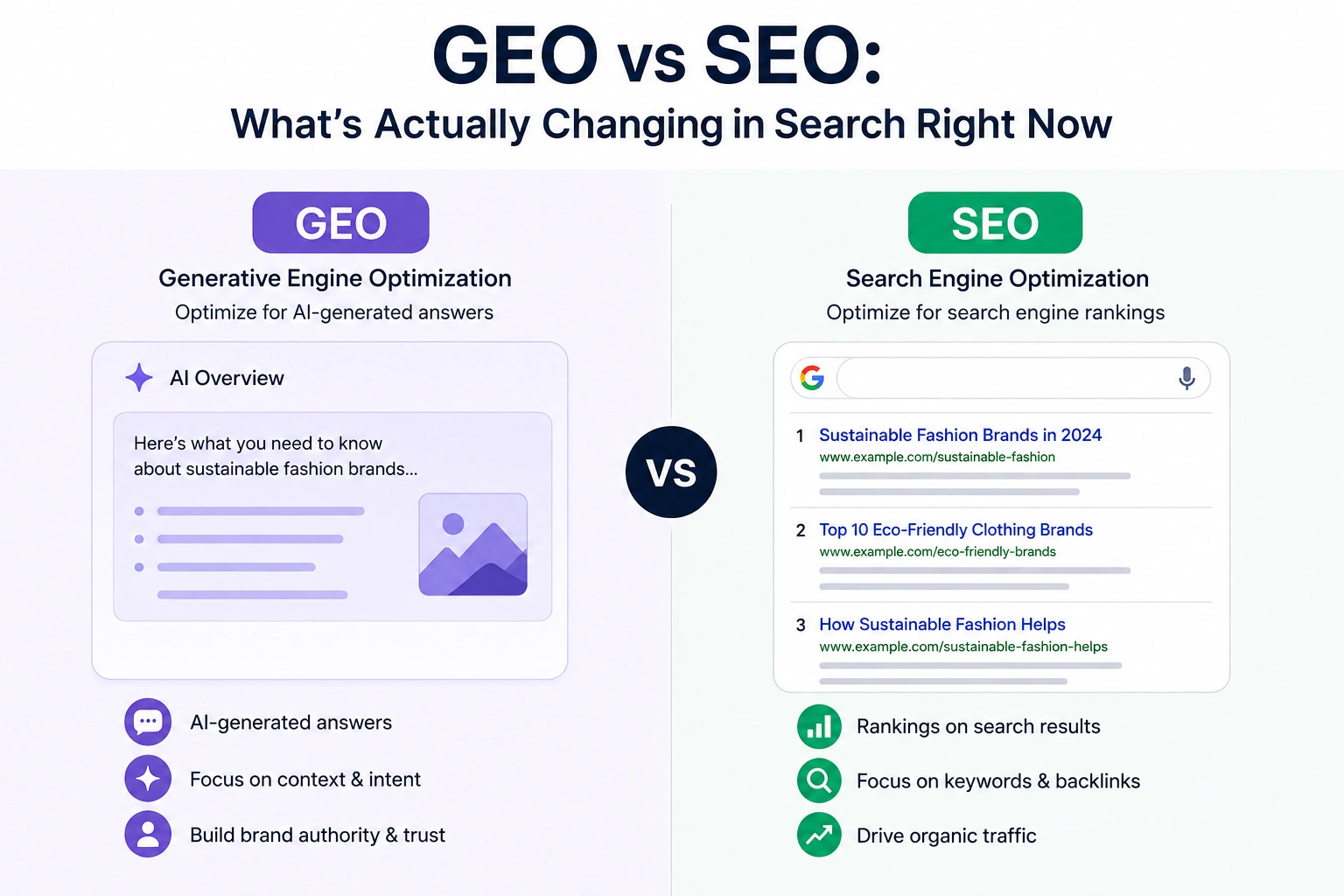
GEO vs SEO: What’s Actually Changing in Search Right Now
Key Highlights You type a question into a search bar. Instead of a list of ten blue links, you get a single, written answer. It pulls from several sources, summarises them, and hands you a conclusion. You may never click through to any of the websites that made that answer possible. This is how a fast-growing share […]
Read More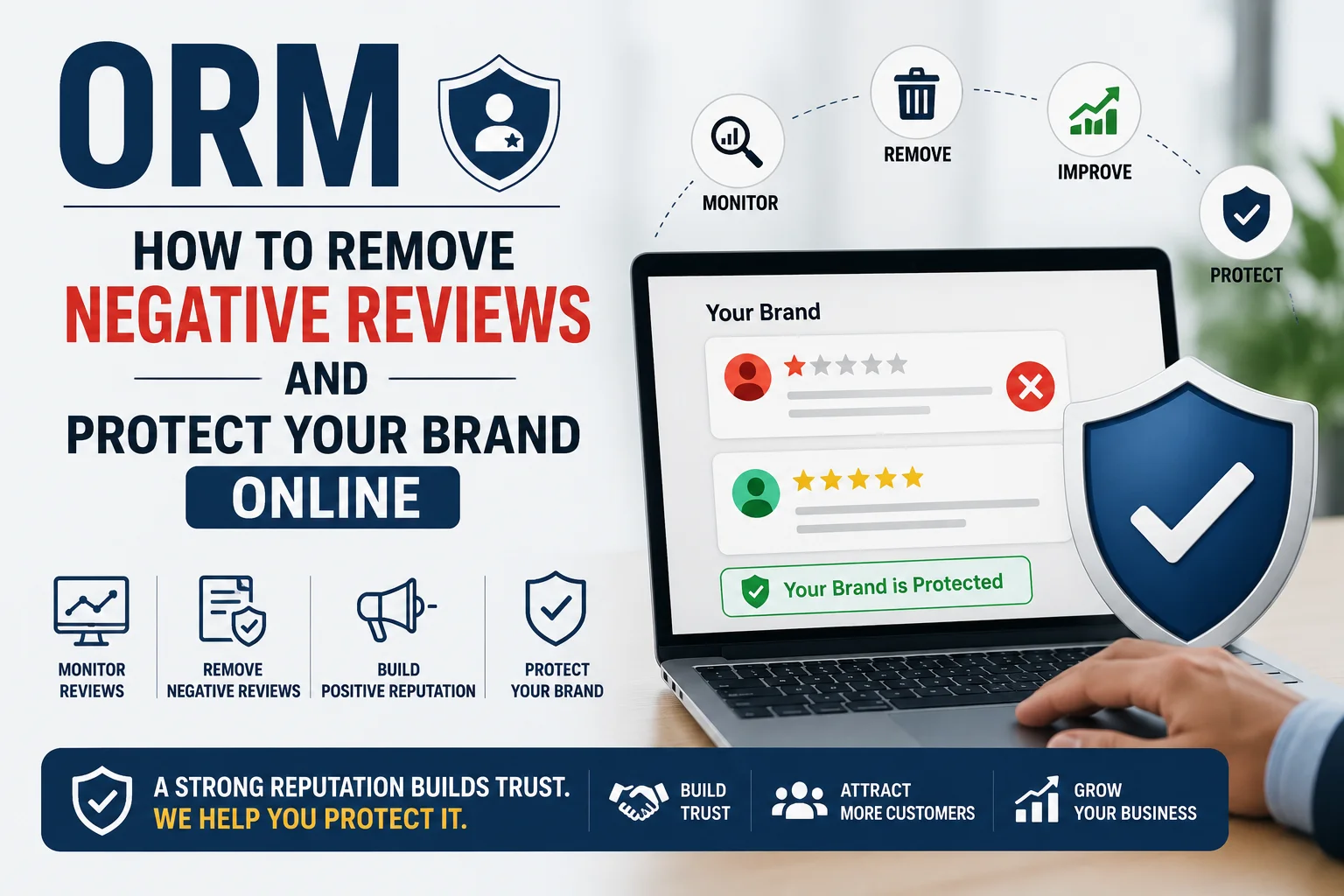
ORM- How to Remove Negative Reviews and Protect Your Brand Online
A customer types your business name into Google. Before they see your website, before they read your offer, they see a star rating and a handful of reviews. One of them is a one-star complaint sitting near the top. In a few seconds, on that single screen, they decide whether you are worth their time. […]
Read More