Ecommerce SEO Services That Help Search Lead to Sales
In ecommerce, growth is won long before checkout. Our ecommerce SEO services improve category strength, product discoverability, and technical performance to build a search presence that drives meaningful growth.

5M+ sales generated for ecommerce clients across India
-
Specialists across WooCommerce, Magento, BigCommerce, WordPress & more
-
50% faster ranking growth — average client result in 90 days
-
Product page, category page & technical ecommerce SEO under one roof
 Get free E-commerce SEO audit


Get Your Free Ecommerce SEO Audit
We'll analyse your store's current rankings, technical health, product page optimisation, and keyword gaps — then show you exactly how to increase organic sales.
5M+
Sales Generated
5000+
Clients Served
500%
Client Retention
97X
Higher ROI vs Paid Ads
 What is Ecommerce SEO
Ecommerce SEO That Helps Your Store Sell More Organically
Ecommerce SEO is the process of improving your online store, from product pages and category pages to technical structure and content, so your products appear when shoppers are actively searching. Unlike paid campaigns, strong ecommerce SEO services build organic visibility that can keep driving traffic and sales over time without a cost per click.
“37.5% of ecommerce traffic comes from organic search, yet 75% of clicks are captured by the top five results. For online stores, stronger rankings do not just improve visibility — they shape revenue potential.”
37.5%
Ecommerce Traffic from Organic
Search is the #1 traffic source for online stores — higher than social, email, or direct.
10x
ROI vs Paid Advertising
Ecommerce SEO delivers long-term compounding returns that paid ads cannot match.
64%
Shoppers Start on Google
Most purchase journeys begin with a search — your products must appear at that moment.
50%
Faster Ranking Growth
Average acceleration in time-to-Page 1 for SaaS ecommerce clients vs industry average.
Problem We Solve
What Stands Between Your Store and
Stronger Organic Sales
Understand the visibility and discovery gaps affecting growth, and how we help address them.

Product Pages Sitting Too Low to Drive Sales
When product pages appear too far down in search results, they lose visibility at the exact moment buyers are ready to compare and purchase. This often happens because pages are too thin, keyword targeting is weak, product details are not structured clearly, or important SEO elements like schema are missing.
How We Fix It:Our approach to ecommerce product page optimization focuses on improving page relevance for purchase-intent searches. We strengthen copy, targeting, structured data, and internal linking so product pages have a better chance of ranking for the terms that matter commercially.

Slow Store Performance Weakening Search and User Experience
In eCommerce, speed affects more than convenience. Slow-loading pages, heavy themes, and poor mobile performance can weaken crawl efficiency, hurt Core Web Vitals, and make shopping journeys feel less smooth, especially on key category and product pages.
How We Fix It:Through our ecommerce technical SEO services, we identify the performance issues affecting store visibility and usability. We prioritise improvements that support crawlability, page experience, and technical health, so SEO performance and store experience improve together.

Product Variants Creating Duplicate SEO Signals
Many online stores generate multiple URLs and near-identical pages across sizes, colours, filters, or variant combinations. That can dilute ranking signals, confuse search engines, and make it harder for the right version of a page to perform well.
How We Fix It:As part of our SEO for ecommerce website strategy, we review variant handling, canonical setup, indexation rules, and content overlap. The goal is to make your store structure clearer, reduce duplication, and strengthen the pages that should actually rank.
Category Pages Not Capturing High-Intent Searches
Category pages often carry the strongest commercial potential in an online store, but they are frequently under-optimised. Weak keyword mapping, limited content, poor internal linking, and loose page structure can all stop them from ranking for valuable non-branded searches.
How We Fix It:Our ecommerce category page SEO work focuses on improving how category pages are targeted, structured, and connected across the store. We align them with search demand, strengthen supporting signals, and help them compete for broader commercial queries.
What We Do
Ecommerce SEO Services That
Strengthen Every Growth Layer
From ecommerce technical SEO and product page optimisation to category page SEO and ecommerce link building, our ecommerce search engine optimization services cover every layer of your store's organic performance.



Ecommerce SEO Audit
We start with a detailed ecommerce SEO audit to understand what is helping, limiting, or weakening your store’s organic performance. Instead of a generic checklist, we build a prioritised plan around the issues most likely to affect rankings, crawlability, and sales.
-
 Technical Audit
We review crawlability, indexation, page health, and store-level technical gaps that can affect visibility.
-
Core Web Vitals
We assess loading performance, mobile experience, and page stability across important commercial pages.
-
Duplicate Content Review
We identify overlap across product variants, filters, and templates that may be diluting SEO signals.
-
Site Architecture Review
We examine how your store is structured so key category and product pages are easier to find, understand, and rank.

Keyword Research & Mapping
Strong ecommerce keyword research is not just about finding search volume. We map commercial, transactional, and category-level terms to the right pages in your store, so your SEO strategy reflects how buyers actually search and compare products.
-
Product Keywords
We identify the terms people use when they are searching for specific products with buying intent.
-
Category Keywords
We map broader, high-opportunity search terms to collection and category pages.
-
Buyer Intent Mapping
We organise keywords by search stage, from research and comparison to purchase-ready queries.
-
Long-Tail Opportunities
We uncover lower-competition searches that can bring qualified traffic with clearer intent.

Technical SEO for Ecommerce
Our ecommerce technical SEO services focus on the structural and performance issues that influence how search engines crawl, index, and prioritise your store. This is a core part of effective SEO for ecommerce website growth.
-
Crawl & Indexation Control
We fix issues that make it harder for search engines to discover and prioritise the right pages.
-
Core Web Vitals Optimisation
We improve technical elements that affect speed, responsiveness, and page experience.
-
Canonical & URL Handling
We review canonicals, parameters, and duplicate paths so signals are cleaner and more consistent.
-
Technical Health Monitoring
We track ongoing issues such as broken links, redirect chains, and indexation anomalies before they grow.

Product Page SEO
Our ecommerce product page optimization work improves how individual product pages rank, communicate value, and support conversion. The goal is not just to add keywords, but to make each page more relevant, complete, and commercially useful.
-
Title & Copy Optimisation
We refine titles, descriptions, and on-page content so pages target the right search terms more clearly.
-
Product Schema
We add and improve structured data that helps search engines understand product information.
-
Image SEO
We optimise alt text, naming, and supporting media signals to strengthen page relevance.
-
Internal Linking Support
We connect products more intelligently with categories and related pages to support discovery and authority flow.

Category Page SEO
Ecommerce category page SEO is one of the strongest growth levers for online stores because category pages often target broader, higher-volume commercial searches. We strengthen these pages so they can compete for the terms buyers use when they are ready to browse and compare.
-
Category Copy Optimisation
We build useful, search-aligned content that supports rankings without weakening the shopping experience.
-
Keyword Mapping
We align category pages with the terms that best match product groups and buying intent.
-
Internal Link Strengthening
We improve the pathways between categories, products, and supporting content to reinforce relevance.
-
Faceted Navigation Review
We manage filter and navigation behaviour so it supports usability without creating SEO confusion.

Site Architecture & Navigation SEO
Good ecommerce site architecture SEO helps search engines understand your store and helps users move through it more easily. We improve structural clarity so authority flows better across the pages that matter most.
-
URL Architecture
We review folder structure, naming, and URL consistency so page relationships are clearer.
-
Navigation Hierarchy
We improve menus and page relationships so important sections of the store are easier to reach.
-
Internal Linking Logic
We strengthen how authority moves from top-level pages to deeper commercial pages.
-
Crawl Priority Planning
We help search engines focus more efficiently on high-value pages across your store.

Schema & Rich Results SEO
Structured data plays an important role in helping search engines interpret ecommerce pages more accurately. We implement and refine markup that supports richer search listings and stronger page understanding.
-
Product Schema
We mark up key product data such as price, availability, and essential product details.
-
Review & Rating Signals
We structure review-related data where relevant to improve content clarity and trust signals.
-
Breadcrumb Schema
We support better page relationships and navigation understanding through clean breadcrumb markup.
-
FAQ & Supporting Markup
Where relevant, we add structured data that supports broader page context and richer result opportunities.

Content & Link Building
Organic growth in ecommerce often depends on more than product and category pages alone. Our ecommerce link building and content work helps stores build authority, capture earlier-stage intent, and create stronger paths into commercial pages.
-
Buying Guides & Informational Content
We create useful content that brings in relevant search traffic before purchase decisions are final.
-
Comparison & Discovery Content
We target the kinds of searches buyers use when weighing options and narrowing choices.
-
Link Building & Digital PR
We build authority through relevant placements, mentions, and backlinks that support long-term SEO strength.
-
Commercial Internal Linking
We connect content back to category and product pages so traffic can move naturally toward conversion.

Ecommerce CRO
Traffic growth matters most when it leads to stronger outcomes. Our ecommerce conversion optimization work focuses on improving the parts of the user journey that influence action, so more of your organic traffic turns into enquiries, carts, and sales.
-
Behaviour Analysis
We review how users move through key pages to identify friction and drop-off points.
-
Page Experience Improvements
We refine layout, clarity, and content flow to support better decision-making on commercial pages.
-
Trust Signal Optimisation
We strengthen the elements that help users feel more confident while browsing and comparing.
-
Conversion Path Review
We look at how SEO landing pages connect to the next step, so visibility and conversion work together.
Our Ecommerce SEO Process
How Our Ecommerce SEO Strategy Delivers ROI
A structured ecommerce SEO strategy works best when every stage has a clear purpose, output, and direction. Our process is built to improve visibility across product pages, category pages, technical store health, and organic growth over time.
1
Ecommerce SEO Audit & Baseline
We begin with a full ecommerce SEO audit to understand how your store is currently performing across technical health, crawlability, indexation, page quality, and organic visibility. This stage helps us identify the issues affecting rankings, traffic quality, and sales potential before implementation begins.
2
Ecommerce Keyword Research & Mapping
Next, we carry out ecommerce keyword research to identify how buyers search across products, categories, and broader commercial queries. We then map those keywords to the right pages in your store, so the SEO strategy reflects actual search intent and store structure.
3
Technical SEO & Site Architecture
Once the search strategy is in place, we move into the technical layer of the store. This stage of our ecommerce technical SEO services focuses on improving crawl efficiency, cleaning up duplicate signals, strengthening site structure, and making it easier for search engines to understand which pages should rank.
4
Product & Category Page Optimisation
This is where the mapped strategy is applied directly to the pages that drive commercial visibility. Our ecommerce product page optimization and category SEO work helps improve relevance, strengthen internal linking, and make key pages more competitive for purchase-intent searches.
5
Link Building & Off-Page Authority
As the store becomes stronger on-site, we focus on building authority beyond it. Our ecommerce link building work supports rankings by improving domain trust, attracting relevant backlinks, and strengthening off-page signals that help competitive pages perform better.
6
Monitor, Optimise & Scale
Ecommerce SEO is not static, especially when products, categories, competition, and search behaviour continue to change. The final stage of our ecommerce SEO strategy focuses on tracking performance, refining priorities, and scaling what is working across the store.
What We Optimise
5 Optimization Pillars Behind Stronger Ecommerce Growth
Our ecommerce SEO services focus on the parts of your store that influence real commercial performance. These are the five pillars that help organic visibility translate into stronger engagement, better buying journeys, and more revenue.
+340%
Avg Organic Traffic Lift
Average organic traffic increase for ecommerce clients in 6 months
30%
CTR Lift from Schema
Average click-through rate increase when Product + Review schema is properly implemented
90
Days to First Page 1 Rankings
Average time from audit completion to first target keyword hitting Page 1
97%
Client Retention Rate
Clients stay because the results compound — ecommerce SEO grows over time, not just initially

Product Page Revenue Optimisation
Strong product SEO should do more than improve rankings. Our ecommerce product page optimization work combines keyword targeting, structured product data, and clearer buying-intent copy so product pages are easier to discover and more useful when shoppers land on them.

Category Page Authority Building

Core Web Vitals & Technical Performance

Internal Linking & Site Architecture

Conversion Rate Optimisation from Organic
Platform Intelligence
Tailored Ecommerce SEO For
Every Platform
Every ecommerce platform handles SEO differently, so optimisation need to be platform-aware from the start. We adapt the strategy to the platform itself,
so technical constraints, built-in features, and store architecture support stronger visibility, cleaner indexation, and better organic growth.

WooCommerce SEO
WooCommerce is flexible, but that flexibility often creates SEO complexity. Product attributes, plugin-heavy setups, and weak archive structures can lead to duplication, slower performance, and thin category pages.
What we do:
- Product attribute URL canonicalization
- WooCommerce schema markup (Product + Review)
- Plugin performance audit & load optimisation
- Category page content & internal linking

Magento / Adobe Commerce SEO
Magento is built for scale, but large catalogues, layered navigation, and complex product relationships can create crawl inefficiencies and thousands of unnecessary URL variations. That makes Magento ecommerce SEO services far more technical than generic store SEO.
What we do:
- Layered navigation SEO & canonical handling
- Crawl budget optimisation for large catalogs
- Magento-specific schema implementation
- Multi-store SEO configuration

BigCommerce SEO
BigCommerce includes useful built-in SEO features, but stores often underuse them or leave platform defaults unchanged. That can affect URL cleanliness, schema coverage, and duplicate content control across product and faceted pages.
What we do:
- BigCommerce URL structure optimisation
- Product & category schema deployment
- Faceted search duplicate content fix
- International & multi-currency SEO

WordPress Ecommerce SEO
WordPress-powered stores work differently because content can become a much bigger SEO advantage. Blogs, buying guides, comparisons, and supporting pages can strengthen category and product visibility when they are planned properly.
What we do:
- Yoast / RankMath schema configuration
- Buying guide & comparison content strategy
- Core Web Vitals & plugin optimisation
- Product-to-blog internal linking strategy

OpenCart SEO
OpenCart is lighter than many platforms, which can help performance, but its default setup can still create SEO friction through weak URL handling, parameter issues, and limited structural clarity.
What we do:
- OpenCart URL rewriting & parameter cleanup
- Product & category schema markup
- SEO-friendly category hierarchy restructure
- Speed & mobile optimisation

Wix Ecommerce SEO
Wix ecommerce has improved, but it still comes with platform-level SEO limits that require careful configuration. Search performance often depends on how well store settings, structured data, and supporting content are handled within those boundaries.
What we do:
- Wix SEO Wiz configuration & sitemap
- Product structured data implementation
- Page speed optimisation within Wix limits
- Content hub & blog SEO strategy
Why Savit
Why Brands Choose Savit for Ecommerce SEO
Choosing an ecommerce SEO agency is not about who promises more traffic. It is about who can turn search visibility into better product discovery,
stronger buying journeys, and measurable organic growth. That is where Savit stands apart.
| Comparison Criteria | Savit Interactive ⭐ Best Choice | Generic SEO Agency | In-House SEO Team |
|---|---|---|---|
| Dedicated ecommerce SEO specialists (not generalists) |
 Ecommerce-only team
|
 Generalist team
|
 Often 1 person
|
| Platform-specific SEO (WooCommerce, Magento, BigCommerce) |
6 platforms covered
|
1–2 platforms only
|
Platform-dependent
|
| Product + Category + Schema — all three simultaneously |
Included every campaign
|
Usually on-page only
|
Resource-limited
|
| Ecommerce-specific link building (not generic DA links) |
Product review + shopping sites
|
Generic guest posts
|
Rarely in scope
|
| Google Premier Partner status |
Top 3% in India
|
Typically not
|
N/A
|
| Conversion rate optimisation included |
Every engagement
|
Extra cost
|
If budget allows
|
| Monthly ranking + revenue attribution reporting |
Custom GA4 dashboard
|
Basic ranking reports
|
If tools available
|
| Core Web Vitals & technical ecommerce SEO |
Dedicated dev team
|
Recommendations only
|
Depends on dev access
|
| 25+ years SEO authority + ecommerce track record |
Since 1999
|
Usually newer
|
Varies by individual
|
| No long-term lock-in contract |
30-day notice
|
Annual contracts
|
Employment contract
|
Find new opportunities to grow your store through SEO.
We analyse your product pages, category structure, technical SEO, and backlink profile to show where focused improvements can drive better organic performance.
Industries We Serve
Ecommerce SEO Built Around How Your Category Sells
Every ecommerce vertical has its own search intent, decision-making triggers,
and content needs. We shape our SEO strategy around the way buyers in your category discover, compare, and choose.
Fashion & Apparel
What we focus on:
Our ecommerce SEO for fashion brands focuses on size and colour variant handling, seasonal search trends, collection page visibility, and style-led content that supports discovery.
Outcome:
- Stronger rankings across collection and product pages for style, trend, and occasion-based searches that drive browsing and purchase intent.
Electronics & Tech
What we focus on:
For ecommerce SEO for electronics, we focus on spec-led product SEO, comparison content, high-intent “best” queries, and structured content that supports technical decision-making.
Outcome:
- Better visibility for comparison, review, and product searches where buyers are actively evaluating features before purchase.
D2C Brands
What we focus on:
Our approach to SEO for D2C ecommerce in India focuses on brand discovery, direct-to-consumer keyword strategy, subscription-led journeys, and content that strengthens both category and brand-led demand.
Outcome:
- Stronger organic visibility across brand, category, and informational searches that help D2C stores attract and convert higher-intent audiences.
B2B Ecommerce
What we focus on:
Our B2B ecommerce SEO services focus on long-cycle buyer intent, specification-led keywords, bulk ordering queries, and taxonomy structures that support more complex product discovery.
Outcome:
- Improved rankings for procurement-focused searches that bring qualified business buyers into the product catalogue.
Health & Wellness
What we focus on:
For ecommerce SEO for healthcare products, we focus on compliant product content, ingredient and condition-led queries, trust signals, and category structures that support careful buyer research.
Outcome:
- Safer, stronger visibility for health-related product searches where credibility, clarity, and intent matter as much as rankings.
Grocery & FMCG
What we focus on:
Our SEO for FMCG ecommerce and online grocery store work focuses on repeat-purchase keywords, local delivery intent, brand-vs-generic search behaviour, and category structures built for frequent buying.
Outcome:
- Better visibility across grocery category, brand, and replenishment-led searches that support repeat orders and stronger product discovery.
Jewellery & Luxury
What we focus on:
Our ecommerce SEO for jewellery focuses on high-value product searches, material and gemstone-specific intent, occasion-led queries, and trust-building content that supports purchase confidence.
Outcome:
- Stronger rankings for high-intent searches where buyers are comparing quality, authenticity, style, and occasion before making a decision.
Home & Furniture
What we focus on:
Our ecommerce SEO services for online stores in home and furniture focus on room-based category architecture, style-led terms, dimension-specific searches, and content that supports longer consideration journeys.
Outcome:
- Improved visibility for category and product searches shaped by room intent, design preferences, and practical buying considerations.
Proven Results
Organic Growth We’ve Delivered
for Ecommerce Brands
Measured through real campaigns, stronger search visibility, and trackable ecommerce performance over time.
Boheco
Challenges
- Strong competition is dominating organic traffic and top keyword rankings.
- Limited flexibility due to compliance restrictions and approval dependencies.
SEO Approach
- Executed technical and on-page optimization, including metadata, schema, and indexing improvements.
- Optimized content with high-intent keyword targeting and search intent alignment.
- Strengthened internal linking and site structure to improve rankings and organic performance.
~2.41X Growth
(8.2K → 19.8K)Organic Sessions
~1.73X Growth
(8.6K → 14.9K)Clicks
~1.65X Growth
(55 → 91)Keyword Rankings
~2.41X Growth
(8.2K → 19.8K)
Organic Sessions
GNH India
Founded in 2003, GNH India is a WHO-GDP and ISO 9001:2015 certified global pharmaceutical distributor based in Mumbai. The company specialises in sourcing and supplying orphan drugs, comparator medications, clinical trial supplies, and name-patient program medicines to more than 180 countries. GNH India is a registered member of Pharmaexcil (Pharmaceuticals Export Promotion Council of India) and FIEO (Federation of Indian Export Organisations), which reflects their commitment to ethical exports, global trade compliance, and quality-driven pharmaceutical logistics.
136.6% Growth
(12629 → 29,883)
Organic Sessions
ProExtender India
ProExtender India is an eCommerce website offering traction-based male enhancement devices designed to support size improvement and conditions like Peyronie’s disease. The website focuses on educating users about the product while driving conversions through organic search visibility and targeted keyword rankings.
~2.57X Growth
(92.5K → 237.4K)
Organic Sessions
eDrugstore
eDrugstore is a U.S.-based online pharmacy and telehealth service specializing in men’s health, sexual wellness, and lifestyle treatments. It offers FDA-approved medications with discreet delivery and online doctor consultations for a safe, private experience.
What Our Clients Say
Trusted by 5,000+ Businesses
Worldwide
Real Shopify clients. Real traffic. Real revenue growth.


Priya K.
D2C Fashion Brand, Mumbai
"Our WooCommerce store was entirely dependent on paid ads before Savit. Within 8 months, organic traffic had overtaken Meta as our #1 revenue channel. The category page strategy they built is still compounding 12 months later."

Rahul S.
Electronics Retailer, Bangalore
"Savit fixed the Magento layered navigation issue that three other agencies had either missed or told us was unfixable. Within 90 days our category pages were ranking — within 6 months we had 187% more organic revenue."
Anita T.
Health Supplements D2C, Pune
"I was sceptical about investing in SEO when Meta Ads were 'working.' But Savit showed me that organic CAC would be 40% lower within a year — and they were right. The health guides they wrote still rank and convert 9 months on."
Vivek N.i
Home Furnishings, Delhi
"We'd worked with two other agencies and seen slow, inconsistent results. Savit's process was different — they started with the technical audit and fixed what was broken before adding content. Rankings came faster because the foundation was right."
Meera G.
Jewellery Ecommerce, Jaipur
The schema markup Savit implemented got our products showing star ratings and price in Google results within 3 weeks. CTR went up 28% before rankings even moved. That's the kind of quick win that makes the investment easy to justify."
Sanjay K.
FMCG Ecommerce, Ahmedabad
"We spent ₹8L/month on Google Shopping and still weren't profitable. Savit's ecommerce SEO now generates more qualified traffic than our Shopping campaigns — at a fraction of the ongoing cost. The ROI comparison after 12 months is remarkable."
20 YEARS OF SEO. NOW FULLY FOCUSED ON YOUR REVENUE.
500+
Ecommerce Stores Audited
5M+
Sales Generated
97%
Client Retention
10X
ROI vs Paid Ads
Ecommerce SEO Questions, Clearly Answered
We answer the questions businesses ask before choosing an ecommerce SEO partner, from strategy and timelines to deliverables, reporting, and what growth should realistically look like.


 Blogs /
Insights
Blogs /
Insights
Stay Ahead With AI Marketing Insights
Every interaction is a chance to build connections and strengthen your brand’s presence. We help you turn social media engagement into real business growth.
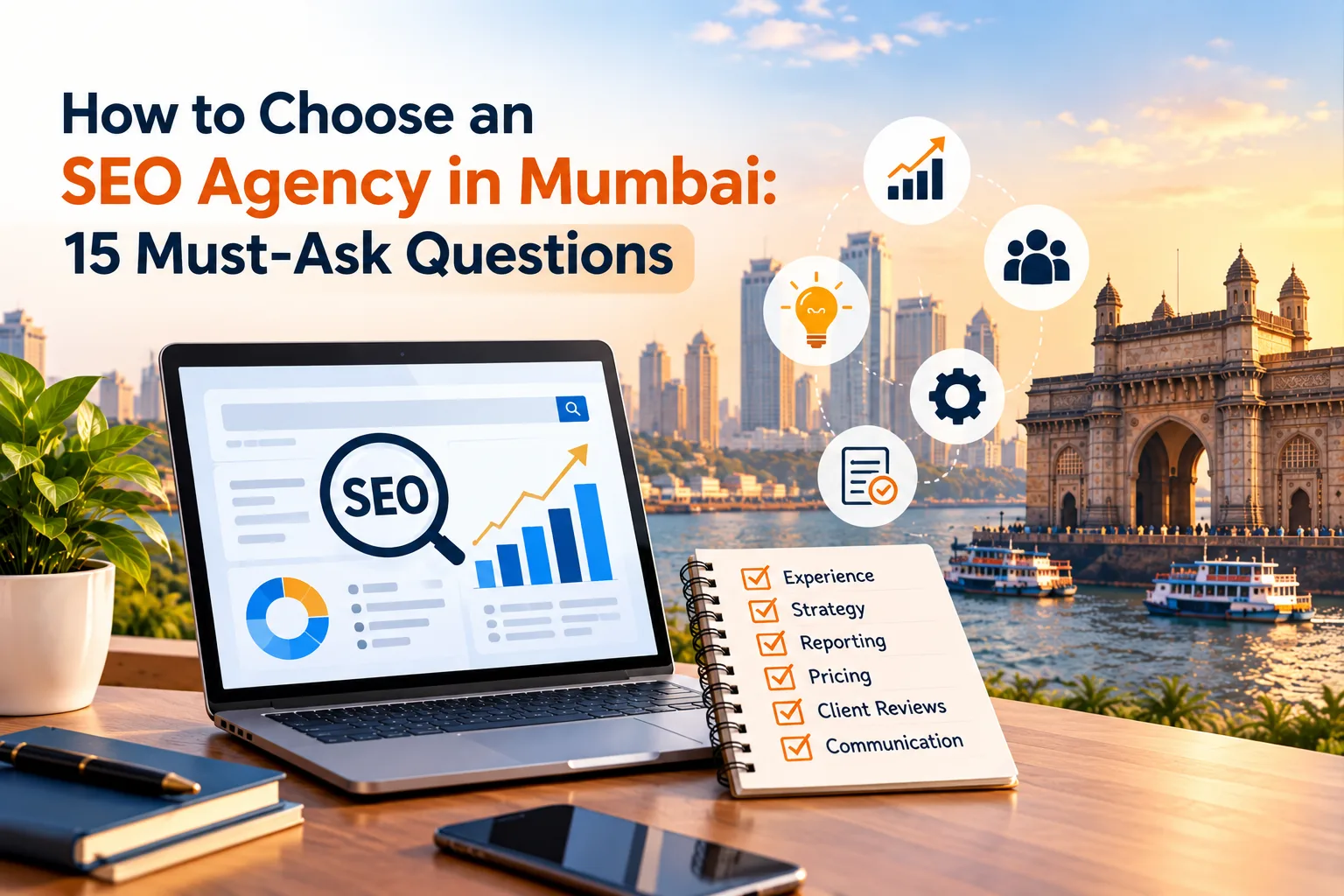

How to Choose an SEO Agency in Mumbai: 15 Must-Ask Questions
Key Highlights Mumbai has thousands of agencies promising to get you to the top of Google. They all sound the same in the pitch: confident, experienced, full of impressive talk about rankings and traffic and return on investment. Six months and a lakh or two of rupees later, too many businesses are exactly where they […]
Read More
Product Feed Optimization- The Secret to Better Visibility in AI Search
Key Highlights A shopper opens an AI assistant and types: “best protein powder for beginners under 2,000 rupees.” The assistant returns three products. Each comes with a name, a price, and a short reason it fits. Your product is not one of them. It is the right price. It is genuinely good for beginners. It […]
Read More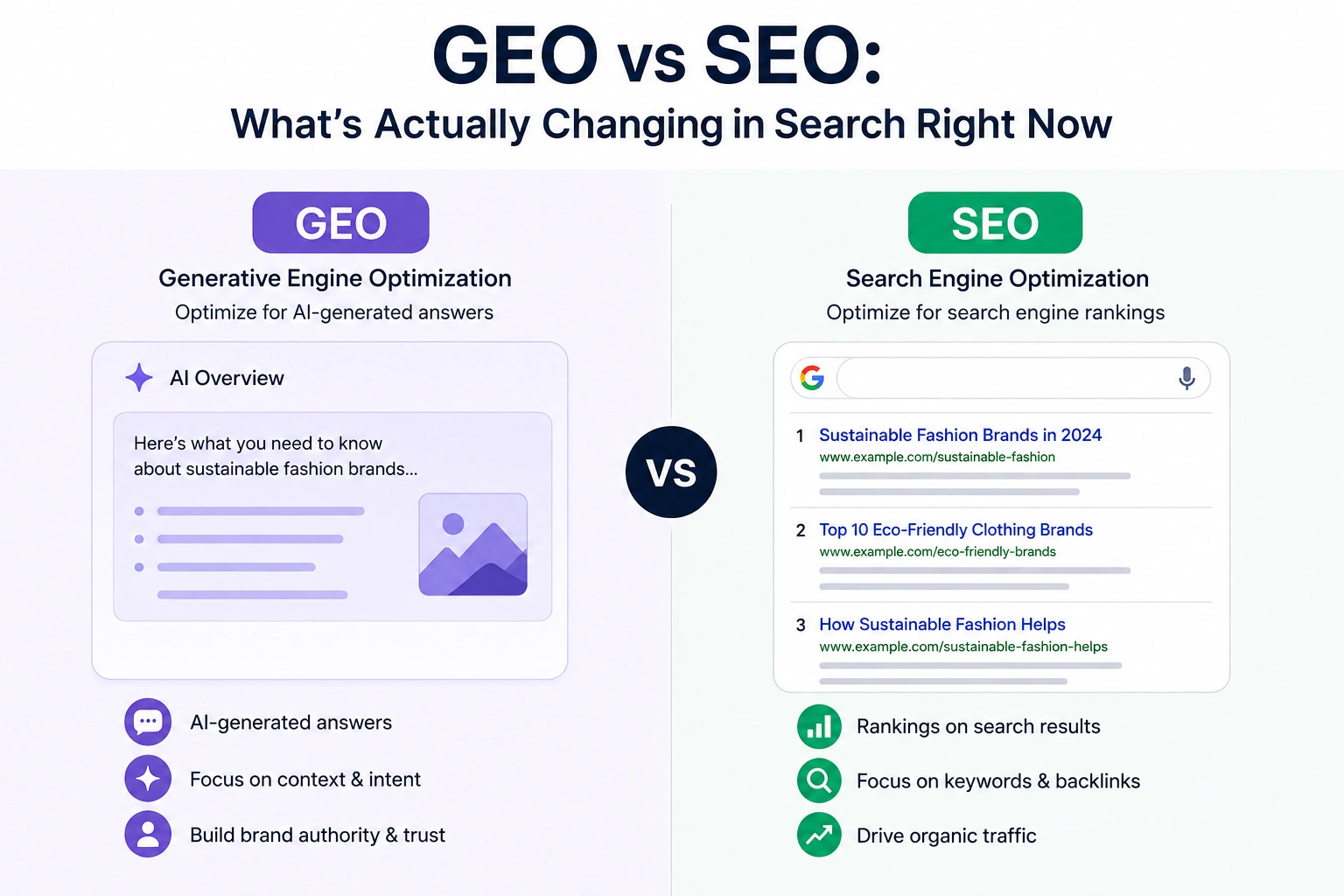
GEO vs SEO: What’s Actually Changing in Search Right Now
Key Highlights You type a question into a search bar. Instead of a list of ten blue links, you get a single, written answer. It pulls from several sources, summarises them, and hands you a conclusion. You may never click through to any of the websites that made that answer possible. This is how a fast-growing share […]
Read More