AEO failures are binary. SEO failures are not.
In traditional SEO, a mistake costs you rankings. You lose some traffic, but you remain on the results page, somewhere between position four and position twelve.
In AEO, a structural mistake removes you entirely. There is no “position eight” in an AI-generated answer. The AI picks a source and moves on. If your content is not structured for extraction, the AI never selects it. It selects your competitor instead.
This is the first thing every Indian business approaching AEO needs to understand. The cost of getting AEO wrong is not visibility reduction. It is visibility elimination.
There is a second dynamic that makes fixing AEO mistakes urgent rather than optional. When you improve your AEO signals, you are not just getting cited more. You are displacing whoever is currently being cited for that query in your category. AEO citation is competitive and zero-sum at the answer layer. Understanding this changes how you prioritize. The most valuable fixes are not the ones that get you cited for new queries. They are the ones who take your most commercially important queries away from the competitor the AI is currently recommending instead of you.
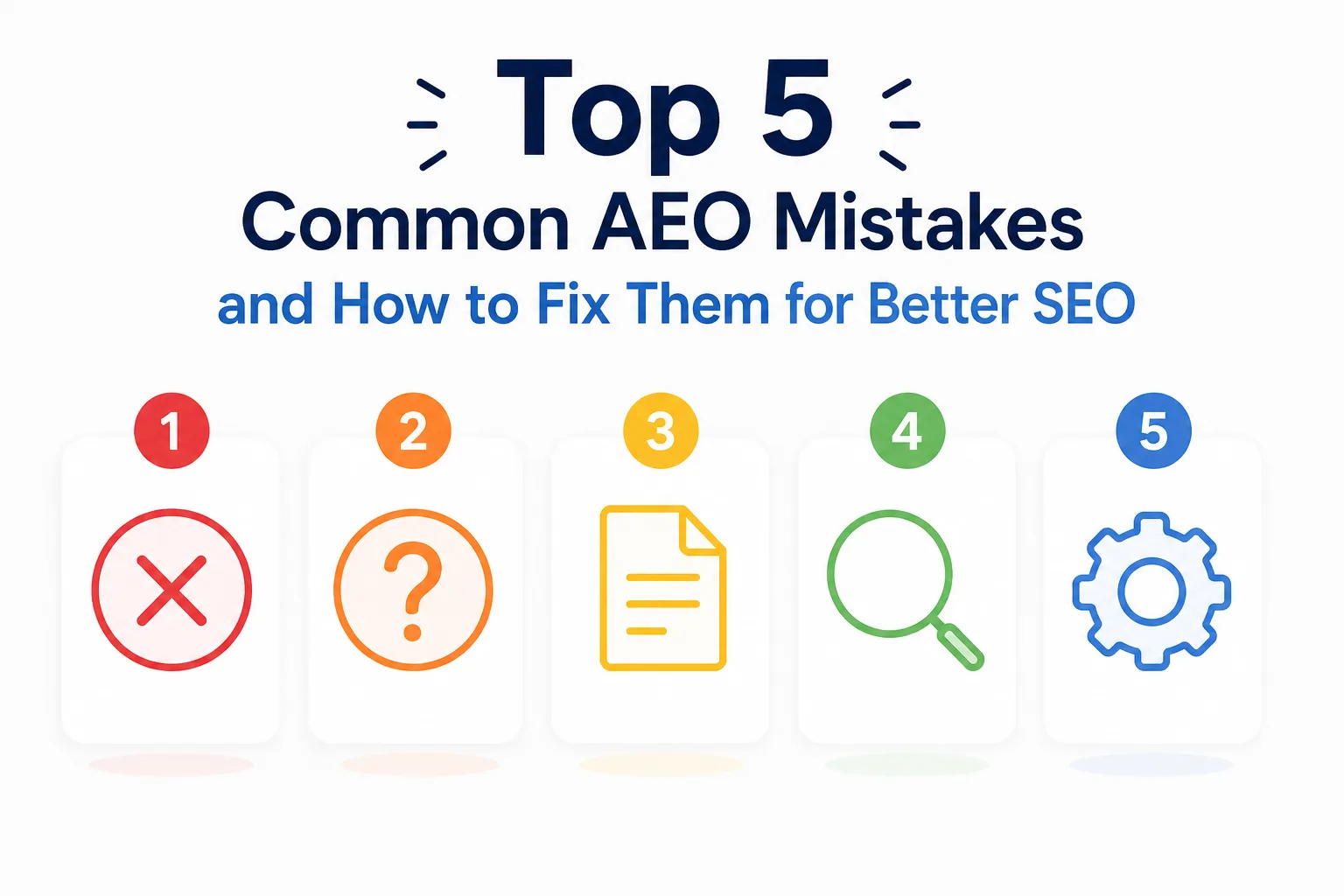
This guide covers the five most common and costly AEO mistakes, what causes each one, and exactly how to fix it.
What Is AEO SEO, And How Is It Different from Traditional SEO?
Answer Engine Optimization (AEO SEO) is the practice of structuring content so AI-powered platforms, like ChatGPT search, Google AI Overviews, Perplexity, and Gemini, can find, understand, and deliver it as the direct answer to a user’s question.
If SEO is about ranking in search results, AEO is about becoming the answer itself.
| Aspect | Traditional SEO | AEO SEO |
| Goal | Rank in search engine results pages | Get cited as the answer in AI-generated responses |
| Success looks like | Position on the results page | Being selected by the AI as the source |
| User action | Click through to your site | Often no click (zero-click answer) |
| Content approach | Keyword-optimized pages | Question-focused, answer-first content |
| Failure consequence | Lower ranking | No citation at all |
Does AEO replace SEO?
No. This is the single most important point to establish clearly. AEO is not a replacement for SEO. It is an extension of it. Google AI Overviews, the most widely seen AI search surface, predominantly cite content already ranking in the top 10 organic positions, per analysis by ConvertMate and Frase. Without solid SEO foundations, your AEO efforts have nothing to build on. The two work together, which is why AEO SEO represents one integrated discipline, not two competing priorities.
Mistake 1: Treating AEO and SEO as Separate Disciplines
What this looks like: Brands completely ignore AEO as they have already covered their bases in SEO, or completely jump onto an AEO strategy whilst completely ignoring the SEO elements that enable that strategy.
Why it happens: The hype around AI search has produced a wave of content declaring traditional SEO obsolete. Teams read these headlines and assume they need to choose. They do not.
The competitive displacement framing matters here. When a competitor who has strong SEO fundamentals but weak Answer Engine Optimizaiton signals starts adding answer-first content and schema markup, they don’t just gain AI visibility. They take AI citation share away from brands whose SEO is equally strong but whose content isn’t structured for extraction. The brands that will lose the most to the current shift in search with AI are not the brands ignoring SEO. They are the brands with good SEO who are not yet adding the AEO layer on top.
How to fix it:
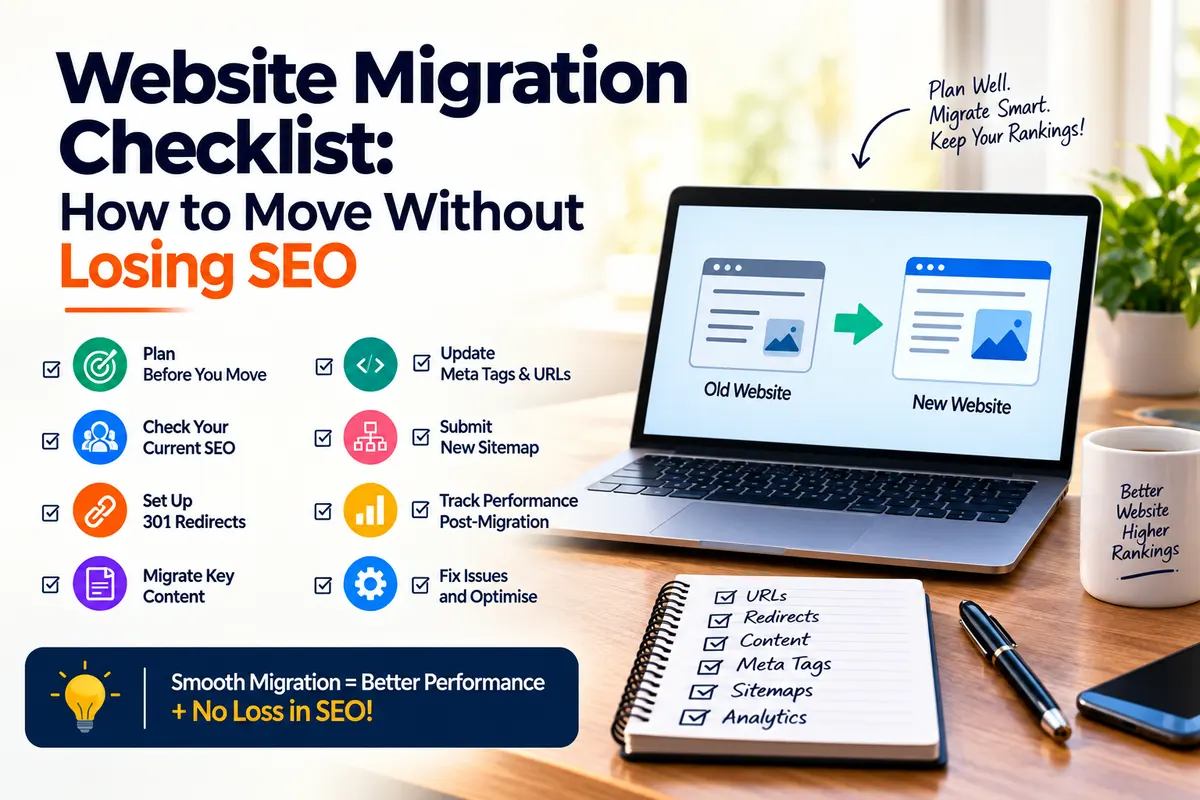
- Maintain strong technical SEO: crawlability, fast load times, mobile optimization, clean site architecture, and quality backlinks. These remain the prerequisite.
- Build AEO on top: answer-first content, question-based headings, schema markup, and content freshness systems.
- Think of every page as serving two audiences simultaneously: a human who is reading and an AI search engine that is extracting.
Mistake 2: Burying The Answer Instead of Leading with It
What this looks like: Content that spends the first three paragraphs on context, history, or keyword-rich preamble before reaching the actual answer to the question the user asked.
Why it happens: Traditional content writing was trained to weave together and gradually develop narrative and ideas. Writers were incentivised with metrics such as time-on-page, which longer intros tend to boost. The way an AI engine works is entirely different.
AI engines do not read to the end. They extract from the beginning.
The practical rule: the first one to two sentences of every section must answer the core question of that section directly and completely. Supporting explanation, context, and evidence follow. This is the inverted pyramid structure applied at the section level, not just the page level.
The over-optimization irony sits inside this mistake. Brands that implement Answer Engine Optimizaiton advice too mechanically produce content that AI cites but humans find robotically unhelpful. Every section begins with a clinical definition. Every paragraph is exactly 50 words. The structure is technically correct and experientially hollow. The AI cites it. The human who arrives on the page leaves quickly. The engagement signals that feed back into SEO start declining.
The discipline is to lead with the answer AND make the page worth reading. The answer block should be concise. The page should not be shallow. Each section must give AI something to extract while also giving the human a reason to keep reading. These are not contradictory goals. They require the same fundamental quality: saying something genuinely useful, clearly.
How to fix it:
- Rewrite your highest-priority pages with the inverted pyramid structure. Primary question answered in lines 1-2. Supporting evidence and context follow.
- Use question-based H2 headings that match how people query AI tools (“What is AEO SEO?” not “Overview of AEO”).
- Keep answer blocks under 60 words for maximum AI extractability. Expand after the block for human depth.
- Pull real questions from People Also Ask, Reddit, Quora, and your own support inbox. These are the queries LLM models are most likely to receive.
Mistake 3: Missing, Wrong, Or Inconsistent Schema Markup
What this looks like: Pages with no schema markup, pages where schema exists but mismatches on-page content, or brands where business information is inconsistent across their website, Google Business Profile, LinkedIn, and third-party directories.
Why schema matters for AI search: LLM models and AI search engines use structured data as a verification layer. Without Organization schema, an AI engine cannot confidently identify your brand when constructing an answer. Without Author and Person schema, it cannot verify the expertise behind the content. Both are core to E-E-A-T signals that influence AI citation confidence.
The trust-accuracy trap is the most underappreciated AEO risk. Most brands think about Answer Engine Optimizaiton failures as “the AI doesn’t cite us.” The harder problem is when the AI does cite you but gets the information wrong because your schema is inconsistent or incomplete. An outdated address, a mismatched business description, or a stale “last updated” date can cause an AI engine to synthesize an answer about your brand that contains inaccurate information — and attribute it to you.
This is worse than no citation. A wrong citation makes the brand the source of misinformation. And because AI engine citations become part of training and retrieval patterns, correcting a bad citation is significantly harder than establishing a correct one from the start.
Schema types that matter most for AI optimization:
| Schema type | What it communicates | Why AI engines need it |
| FAQPage | Direct question-and-answer pairs | AI can extract and attribute specific answers |
| HowTo | Step-by-step procedural content | AI can present processes clearly with attribution |
| Article / BlogPosting | Content type, author, publication date | Helps AI verify recency and credibility |
| Organization | Brand identity, official description, contact | Enables entity verification across AI knowledge graphs |
| Person / Author | Author credentials and expertise | Supports E-E-A-T signals at the content level |
How to fix it:
- Implement Organization schema across your entire site with consistent, verified brand information.
- Add FAQ schema to every page that answers multiple questions. Add HowTo only to genuinely procedural content.
- Validate all schema using Google’s Rich Results Test before publishing.
- Audit brand information across every web surface: website, Google Business Profile, LinkedIn, industry directories, Wikipedia if applicable. Consistency is the AI’s trust signal.
- Match schema exactly to on-page content. Schema that promises an FAQ structure when the page doesn’t have one actively harms credibility with AI engines.
Mistake 4: Ignoring Content Freshness and Citation Decay
What this looks like: Optimising content once, seeing initial AI citations, and then leaving it untouched for twelve months or more.
Why freshness matters more for AEO than for SEO: Traditional SEO rewards quality and authority over time. A well-built page can rank strongly for years with minimal updates. AEO has a different decay profile.
The numbers from AirOps’ 2026 State of AI Search Report are specific: 83% of AI citations for commercial and evaluation queries came from pages updated within the past 12 months. Over 60% of AI-cited pages were refreshed within the last six months. Frase’s 2026 platform analysis puts citation decay at approximately 13 weeks without a freshness update. The AI shifts to a fresher competitor page, and the original page’s citation share drops.
This is a fundamentally different maintenance model. AEO content is not a one-time investment. It is an ongoing system.
For Indian businesses, this has specific practical implications. India is one of the world’s most mobile-first search markets, with approximately 90% of Indian internet searches originating from mobile devices, according to Google India data. Mobile-first users rely disproportionately on AI-generated answers precisely because they are less likely to navigate multiple search results on a small screen. An Indian business whose content has decayed out of AI citation is losing mobile-first discovery in a market where that discovery channel is growing faster than desktop.
The broader context: the Government of India’s IndiaAI Mission, approved in 2024 with a ₹10,372 crore allocation, is specifically designed to accelerate AI adoption across Indian businesses, government services, and educational institutions. AI search adoption across Indian internet users will grow substantially in the next three years. The brands that build content freshness systems now will be positioned for that growth.
How to fix it:
- Set a content refresh cadence of every three to four months for your most commercially important pages.
- Add visible “Last Updated” dates to signal freshness to both users and AI engines.
- Each refresh should include updated statistics, new examples, and any information that has changed since the last version.
- Prioritize refreshing evaluation-stage content (comparison pages, “best X” pages, category explainers). This is where AirOps data shows freshness matters most.
- Build a monitoring system: test your priority queries in ChatGPT search and Perplexity monthly. If you have dropped out of citations you were previously receiving, freshness decay is often the cause.
Mistake 5: Mismatching Content Format to Query Intent
What this looks like: Writing long paragraph-based answers to questions which require lists. Providing bullets to define terms. Creating tables to answer questions which require step-by-step instructions. Using the same structure for every answer, irrespective of the question being asked.
Why format matters for AI search engines: LLM models are trained to recognize patterns. When they are trained, they are taught that some questions require specific answer structures. For example, a “what is” question expects a paragraph explanation; a “how to” question requires an ordered list; and a “what’s the difference between” question demands a comparison. When you have the format required for a specific query intent, the AI is more confident in identifying and displaying your answer.
When it doesn’t match, the AI either skips your content or extracts it in an awkward way that serves neither you nor the user.
The E-E-A-T experience gap sits inside this mistake. Google’s quality framework includes Experience as a distinct signal, and it is the component most Indian business content currently lacks. “Experience” means demonstrating lived, first-person knowledge: “We ran this implementation and here is what we measured” rather than “research suggests that Organizations implementing this approach see.” AI engines are increasingly biased toward content that signals genuine experience, not just topical coverage.
For Indian B2B brands especially, this is the highest-leverage improvement available. Most Indian professional services content is written in the abstract third person. Moving even a portion of it to first-person case observations, specific client outcomes, or specific implementation details that only someone who has done the work would know creates an E-E-A-T signal that is significantly harder for competitors to replicate.
Content format mapping by query intent:
| Query type | Expected format | Example query |
| Definition / What is | 40-60 word paragraph answer | “What is AEO SEO?” |
| Process / How to | Numbered list with clear steps | “How do I implement FAQ schema?” |
| Comparison | Table with named columns | “AEO vs SEO: what’s the difference?” |
| Benefits / Reasons | Bullet list | “Why does schema matter for AI search?” |
| Decision / Should I | Short paragraph + supporting evidence | “Should I prioritize AEO or SEO first?” |
How to fix it:
- Map the primary query intent of every important page before writing or rewriting it.
- Choose the format before writing, not after.
- For pages covering multiple question types, use different formats within the same page, matching each section’s format to its specific question type.
- Add first-person experience signals where they exist: specific client results, implementation observations, internal data. Use AI in marketing tools to help draft sections, but ensure the first-person insight is genuine and human-supplied.
- Review your highest-traffic pages for format mismatches. A long prose answer to a “how to” question is one of the most common and most fixable AEO mistakes.
How Different AI Platforms Approach Citation Differently
Not all AI search engines behave the same way. A strong AEO strategy accounts for the variations.
| Platform | What It Favours |
| ChatGPT search | Authoritative, in-depth long-form content with clear source attribution |
| Perplexity | Fresh, well-cited articles with explicit sourcing and recent publication dates |
| Google AI Overviews | Content already ranking in the top 10 organic positions with strong E-E-A-T |
| Gemini | Structured, entity-rich content with comprehensive schema and Knowledge Graph alignment |
The practical implication: optimising for the fundamentals (clear structure, answer-first content, credible sourcing, content freshness, comprehensive depth, and schema markup) benefits every platform. Platform-specific optimization is a second-order concern. Get the fundamentals right across all content, and the platform-specific visibility follows.
Measuring AEO Success
Traditional rankings no longer tell the full story. AEO requires a supplementary measurement framework.
The metrics that matter:
- AI citation presence. Test your highest-priority queries monthly in ChatGPT, Perplexity, Google AI Overviews, and Gemini. Log which sources are cited. Track whether your content is present and whether the information attributed to you is accurate.
- Citation accuracy. When you are cited, are the facts correct? This is the trust-accuracy issue in practice. Incorrect citations need to be addressed by updating and clarifying the source content.
- Branded query visibility. Search your brand name in AI tools. What does the AI say about you? Are the facts current, positive, and consistent with how you describe yourself?
- Business impact. Are leads, demo requests, or direct enquiries increasing from the pages you have optimized for AEO? AI visibility without downstream business impact is noise.
One clear principle: AEO is not a vanity channel. The goal is not to be cited for the most queries. It is to be cited for the queries that bring qualified customers.
How Savit approaches AEO SEO
At Savit, AEO SEO is part of every SEO engagement, not a separate service that gets added later when clients notice their traffic shifting to AI search.
The rationale is straightforward. AI search adoption in India is accelerating. Businesses that build AEO-ready content now will be the ones the AI recommends as the behaviour becomes mainstream. Businesses that wait will find themselves optimising against a body of competitor content that has already earned citation trust.
Our AEO work starts where SEO always starts: technical health, content quality, and E-E-A-T signals. On top of that, we implement the specific demands for AEO: entity consistency on all web surfaces, use of schema as an infrastructure layer, restructuring pages for answer-first content on the pieces of content that will be most commonly queried via A.I. Search, and content freshness systems that address (and reverse) the citations decay highlighted by AirOps.
We use AI in marketing tools to research the actual questions audiences are asking in AI search environments, to compare how current content performs against competitors in AI citation tests, and to generate first-draft AEO-ready sections. Every output is reviewed and refined by our team before it reaches the client’s audience.
For AI optimization and measurement, we track citation presence across ChatGPT search, Perplexity, Google AI Overviews, and Gemini for our clients’ highest-priority queries. We flag citation decay before it compounds, and we flag citation inaccuracies before they damage brand credibility.
As a top digital marketing agency in India with over two decades in search marketing, we have navigated every shift in how people find businesses online. AEO is the current shift. Our online marketing services now routinely include AEO audits, schema implementation, and AI visibility monitoring alongside traditional SEO, because brands that do only one without the other are leaving the majority of search with AI visibility on the table.
If you want to understand where your content stands in AI-generated answers today, and what it would take to be cited where your customers are increasingly searching, that is exactly the work we do.
Talk to Savit about getting your business visible in both Google rankings and AI-generated answers.