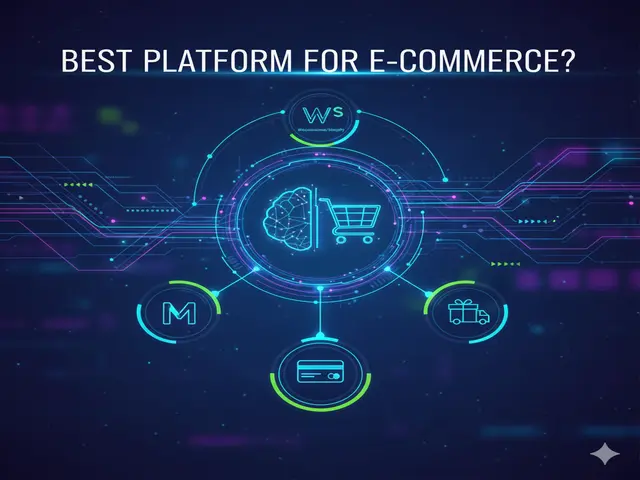
Explore how CMS platforms power modern online stores, what makes headless commerce a game-changer, and which CMS fits your goals.
The success of any online store starts with the system that powers it. Behind every sleek product page and friction-free checkout lies a content management system (CMS) that quietly orchestrates design, data, and customer experience.
With global e-commerce sales projected to exceed $8 trillion by 2028 (Statista), brands can no longer rely on static storefronts or hard-coded websites. They need CMS platforms that combine agility with scalability.
Businesses today prioritise platforms that “let teams move fast, personalise faster, and scale securely.” In this guide, we’ll unpack how different types of e-commerce CMS platforms compare and which one may be right for your business.
What Is an E-commerce CMS?
An e-commerce CMS (content management system) is software that allows you to create, update, and organize digital content while integrating shopping cart and payment functionality. It’s the backbone that lets merchants publish product listings, blogs, and landing pages—without writing a single line of code.
CMS and e-commerce are inseparable — the platform managing your content must also power your shopping experience, ensuring consistency across product, blog, and landing pages. While a traditional CMS, such as WordPress, focuses on managing content, an e-commerce CMS merges content and commerce. Razorpay describes it as “a single platform that allows you to manage both the content and commerce aspects of your online store.”
In short, your CMS dictates not just how your site looks, but how efficiently it converts.
SaaS vs. Traditional E-commerce Platforms
Choosing between a SaaS (Software-as-a-Service) CMS and a traditional self-hosted one is often the first major step when you compare e-commerce and traditional commerce, as each approach shapes how you build, manage, and scale your online store.
Traditional (Open-Source) CMS
Open-source platforms such as WooCommerce, Magento (Adobe Commerce), and OpenCart give complete control over code, hosting, and design. You can modify anything—ideal for brands with strong in-house tech teams.
According to W3Techs, WordPress powers over 43 percent of all websites worldwide, making WooCommerce a natural extension for content-heavy stores. However, open-source control also brings responsibility: security patches, plugin conflicts, and hosting costs fall on the business.
SaaS E-commerce Platforms
SaaS solutions, like Shopify, BigCommerce, and Wix, are fully hosted in the cloud. They handle updates, PCI-DSS compliance, and server performance automatically. An analysis shows SaaS e-commerce adoption grew 27 percent year-on-year, thanks to lower setup times and built-in scalability.
The trade-off? You sacrifice some backend flexibility but gain faster deployment and predictable monthly costs which is critical for startups and mid-market retailers. Choosing the best CMS platform for e-commerce ultimately depends on how much flexibility, speed, and control your business needs.
In summary:
- Go traditional if you need total control and custom workflows.
- Choose SaaS if speed, security, and ease of maintenance matter more.
The Rise of Headless Commerce
Modern shoppers interact with brands across devices and channels—from Instagram reels to smart speakers. To serve them seamlessly, many businesses are turning to headless commerce.
Headless architecture decouples the front-end presentation layer from the back-end logic. Developers can build lightning-fast, device-specific experiences without touching the commerce engine. The move toward headless and composable systems is an ongoing industry-wide trend.
Compared with traditional “monolithic” setups, headless offers:
- Faster updates (front-end and back-end teams work in parallel)
- Freedom to choose any front-end tech stack
- Easier omnichannel integration—web, mobile, in-store kiosks, even AR
Global brands like Nike and Target already use headless frameworks to deliver unified experiences that feel native across every platform.
Benefits of Headless Commerce for Modern Brands
For ambitious e-commerce players, headless commerce brings tangible business advantages:
- Omnichannel Consistency: Deliver a seamless journey from mobile app to desktop to physical store, powered by unified APIs (Adobe Commerce Insights).
- Speed & Agility: Parallel development reduces time-to-market for new features.
- Scalability: Scale front-end traffic surges without risking core order data.
- Personalisation: Integrate CRM and analytics tools to serve tailored content in real time.
- Future-readiness: Add emerging touchpoints—voice, wearables, IoT—without rebuilding your backend.
Top E-commerce CMS Platforms to Consider in 2026
With hundreds of CMS options in the market, the best choice depends on your business model, scale, and technical maturity. Below are the leading contenders in 2025, each addressing different priorities — from ease of use to enterprise-grade flexibility.
1. Shopify
Shopify continues to dominate the SaaS e-commerce landscape with over 4.6 million active websites worldwide (Enricher). It’s designed for businesses that value speed, reliability, and minimal maintenance.
Shopify’s intuitive dashboard, AI-driven store builder, and robust app ecosystem make it ideal for entrepreneurs and growing D2C brands. With built-in hosting, security, and PCI compliance, users can focus entirely on sales and marketing.
For enterprises, Shopify Plus supports headless integration through its Hydrogen and Oxygen frameworks, enabling custom storefronts without sacrificing performance. Businesses can further enhance visibility through professional Shopify development services and ongoing Shopify SEO optimization, ensuring products rank better and pages load faster.
2. WooCommerce (WordPress)
WooCommerce remains the go-to open-source CMS for content-heavy or blog-led brands. It combines WordPress’s flexibility with extensive plugin support for payment gateways, shipping, and analytics.
The platform’s modularity makes it appealing to developers who want fine-grained control over every element. However, maintaining plugins, hosting, and updates requires technical oversight. WooCommerce works best when brands already rely on WordPress and want to extend into e-commerce without replatforming.
3. BigCommerce
BigCommerce has carved a niche as an “open SaaS” platform — blending the agility of cloud hosting with the customization depth of open APIs. Its built-in SEO tools, multichannel integrations (Amazon, Meta, TikTok), and scalable infrastructure make it a strong choice for mid-market and enterprise businesses.
Brands using its open API model experience faster time-to-market compared with traditional setups. The platform’s native analytics suite and API-driven flexibility also make it a preferred option for omnichannel retailers.
4. Adobe Commerce (Magento)
Formerly known as Magento, Adobe Commerce is an enterprise-grade CMS with powerful B2B features. It allows businesses to build self-service buying portals, manage complex catalogues, and create multilingual, multi-currency experiences.
While it demands higher technical investment, Adobe Commerce is unmatched for large enterprises seeking full backend control. Its AI-powered product recommendations and Adobe Sensei analytics help optimize conversions and personalise user experiences at scale.
5. Wix / Squarespace / HubSpot CMS
For startups or creative entrepreneurs, platforms like Wix, Squarespace, and HubSpot CMS offer easy drag-and-drop interfaces, beautiful templates, and built-in SEO options. While not as powerful as enterprise systems, they’re ideal for quick launches and integrated marketing workflows — especially for service-led or niche retail businesses.
Wix and HubSpot consistently score high on ease of use, while Squarespace leads in design quality and speed of setup.
How to Choose the Right E-commerce CMS for Your Business
No single CMS fits all. The right platform depends on your growth stage, budget, and technical resources. Here’s a quick evaluation framework:
| Startup / Small Business | SaaS (Shopify, Wix) | Minimal setup, hosted security, affordable plans |
| Growing / Mid-Market | Hybrid or Open SaaS (BigCommerce, WooCommerce) | Flexibility + scalability |
| Enterprise / Global Brand | Headless or Adobe Commerce | Full customisation, omnichannel integration, robust APIs |
When evaluating, consider:
- Ease of use for non-technical teams
- SEO and analytics capabilities
- Integration with CRMs, ERPs, or marketing tools
- Total cost of ownership (subscription, hosting, plugins)
- Quality of customer support and community ecosystem
Your CMS should not only power transactions but also fuel long-term brand growth.
Integrating SEO and Performance with the Right CMS
Even the best CMS can underperform if SEO isn’t built into its foundation. The ideal approach is to select CMS platforms that support structured data, canonical tagging, and sitemap automation, all of which are essential for achieving higher crawl efficiency.
A well-optimised e-commerce CMS should offer:
- Fast, mobile-first templates (Core Web Vitals ready)
- Editable meta titles and descriptions
- Schema support for products, reviews, and FAQs
- Automatic image compression and lazy loading
Shopify and WooCommerce both provide SEO extensions and built-in tools to enhance ranking potential. Partnering with a team offering Shopify SEO services ensures every product page aligns with search best practices while maintaining UX quality.
Building a Scalable E-commerce Foundation
The best CMS for your e-commerce business is the one that aligns with your resources, roadmap, and growth vision. SaaS systems deliver speed and reliability, open-source platforms grant flexibility, and headless commerce sets the stage for future-ready omnichannel experiences.
At Savit Interactive, we help brands unlock that balance — combining powerful CMS architecture with custom Shopify development, Shopify SEO services, and conversion-centric content strategies. The goal is simple: to help your business build a store that performs, scales, and evolves with your customers.
Ready to Build or Scale Your E-commerce Store?
Whether you’re launching your first online store or migrating to a more powerful CMS, our experts can help you choose the right platform, develop custom storefronts, and improve your SEO visibility. Partner with Savit Interactive to create an e-commerce experience that’s fast, scalable, and search optimised.